
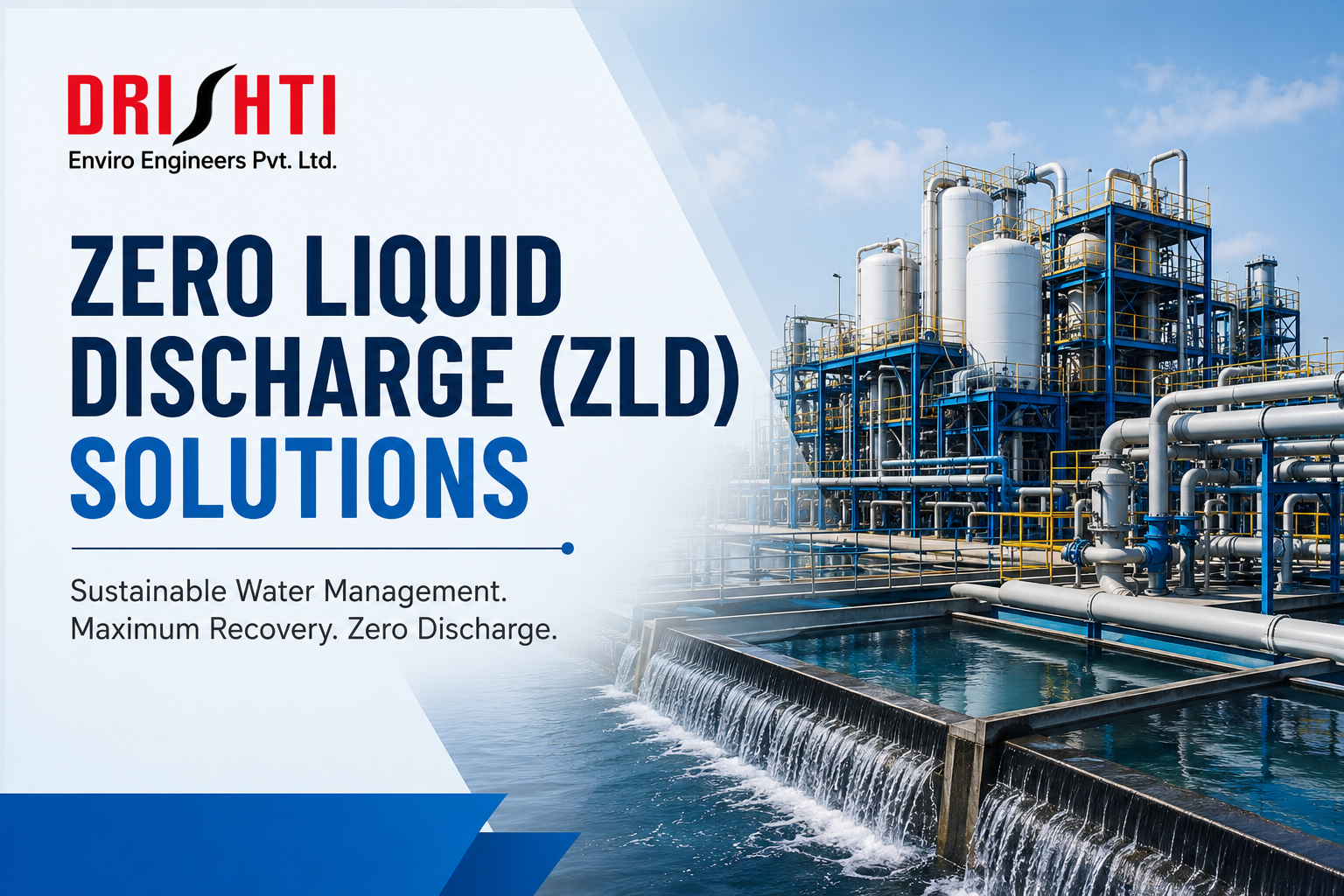
Zero Liquid Discharge (ZLD) Solutions are becoming essential for industries that generate large volumes of wastewater with high levels of contaminants. Textile, pharmaceutical, and chemical industries face strict environmental regulations and increasing pressure to reduce freshwater consumption. A well-designed ZLD system enables industries to recover water, minimize waste, and meet pollution control standards while improving long-term operational efficiency
What is a Zero Liquid Discharge (ZLD) System?
A Zero Liquid Discharge (ZLD) system is an advanced wastewater treatment process that recovers reusable water from industrial effluent while converting the remaining dissolved solids into solid waste for safe disposal. The objective is to eliminate liquid discharge from the facility, helping industries conserve water and comply with environmental regulations.
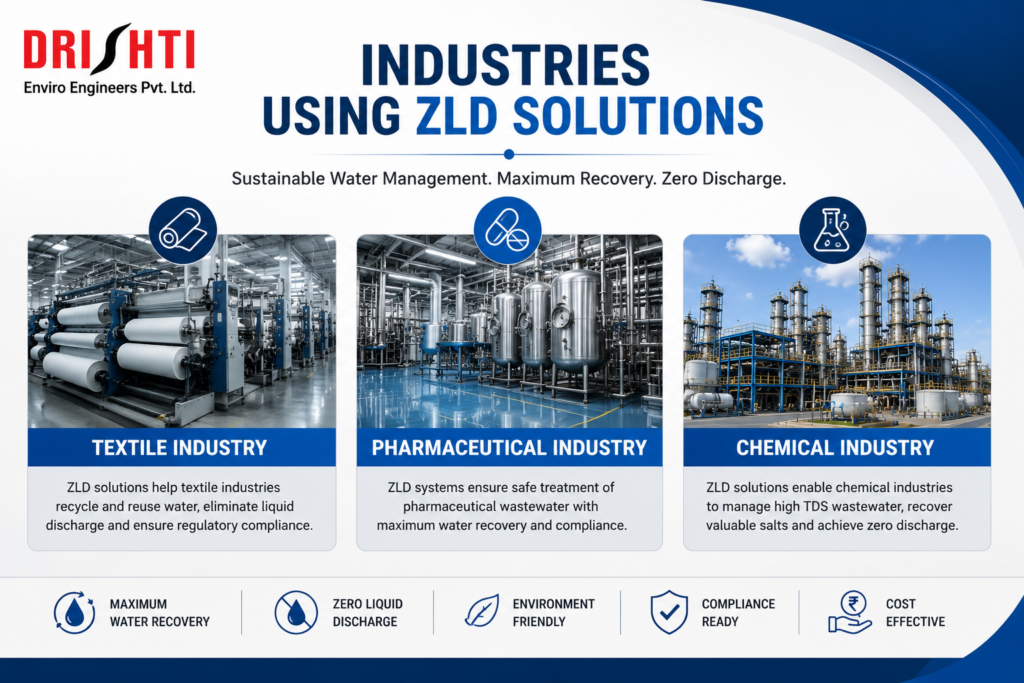
Why Textile, Pharmaceutical, and Chemical Industries Need ZLD Solutions
These industries produce wastewater containing high concentrations of dissolved salts, chemicals, organic matter, dyes, and process contaminants. Conventional treatment systems may not achieve the required discharge standards, making ZLD an effective long-term solution.
Key benefits include:
- Maximum water recovery and reuse
- Reduced dependence on freshwater
- Compliance with Pollution Control Board norms
- Lower environmental impact
- Sustainable wastewater management
- Improved operational efficiency
| Industry | Common Wastewater Characteristics | Challenges | How ZLD Solutions Help |
|---|
| Textile Industry | High TDS, dyes, color, suspended solids, chemicals | Water pollution, color removal, high salt concentration | Recovers water for reuse, reduces freshwater consumption, removes dissolved salts, ensures regulatory compliance |
| Pharmaceutical Industry | Organic compounds, solvents, process chemicals, high COD | Complex wastewater treatment, strict discharge norms | Enables high water recovery, treats complex effluents, minimizes environmental impact, supports compliance |
| Chemical Industry | High TDS, acids, alkalis, process chemicals, variable pH | Hazardous wastewater, fluctuating effluent quality | Recovers reusable water, manages concentrated waste, reduces liquid discharge, improves sustainability |
Key Components OF A Zero Liquid Discharge (ZLD) System
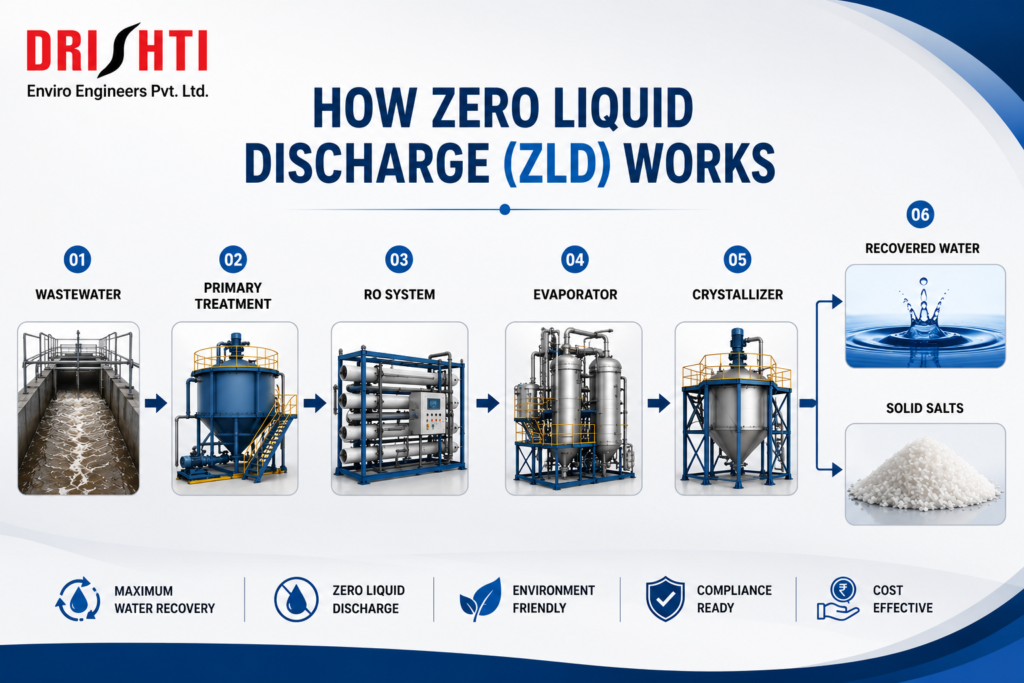
A Zero Liquid Discharge (ZLD) System consists of multiple treatment stages that work together to recover reusable water and eliminate liquid waste. Each component plays a crucial role in achieving maximum water recovery and environmental compliance.
1. Equalization System
The equalization tank collects wastewater from different industrial processes and balances the flow, pH, and pollutant concentration. This ensures a consistent wastewater quality before treatment, improving the efficiency of downstream processes.
2. Primary Treatment
During primary treatment, large suspended solids, oil, grease, and other floating impurities are removed through physical and chemical processes such as screening, sedimentation, and coagulation-flocculation. This reduces the pollutant load before biological treatment.
3. Secondary Treatment
Secondary treatment uses biological processes to remove dissolved organic matter from wastewater. Beneficial microorganisms break down biodegradable pollutants, reducing Biological Oxygen Demand (BOD) and Chemical Oxygen Demand (COD).
4. Tertiary Treatment
Tertiary treatment provides advanced purification by removing fine suspended particles, dissolved contaminants, and residual impurities. This stage may include filtration, activated carbon filters, and advanced oxidation processes to improve water quality before membrane treatment.
5. Reverse Osmosis (RO)
Reverse Osmosis is a membrane-based treatment process that removes dissolved salts, minerals, and other impurities from wastewater. The RO system produces high-quality permeate water suitable for reuse, while the concentrated reject stream is sent for further treatment.
6. Evaporation System
The RO reject is treated in an evaporation system, where water is separated from dissolved solids through controlled heating. The recovered water can be reused within the plant, while the concentrated brine moves to the next stage.
7. Crystallization System
The crystallizer converts the concentrated brine into solid crystals by removing the remaining moisture. This process ensures that no liquid waste remains, achieving the core objective of Zero Liquid Discharge.
8. Solid Waste Handling
The final solid residues or salt crystals generated during crystallization are collected, dewatered if required, and disposed of or managed according to environmental regulations. Proper solid waste handling ensures safe disposal and complete compliance with pollution control standards.
Advantages OF ZLD Solutions
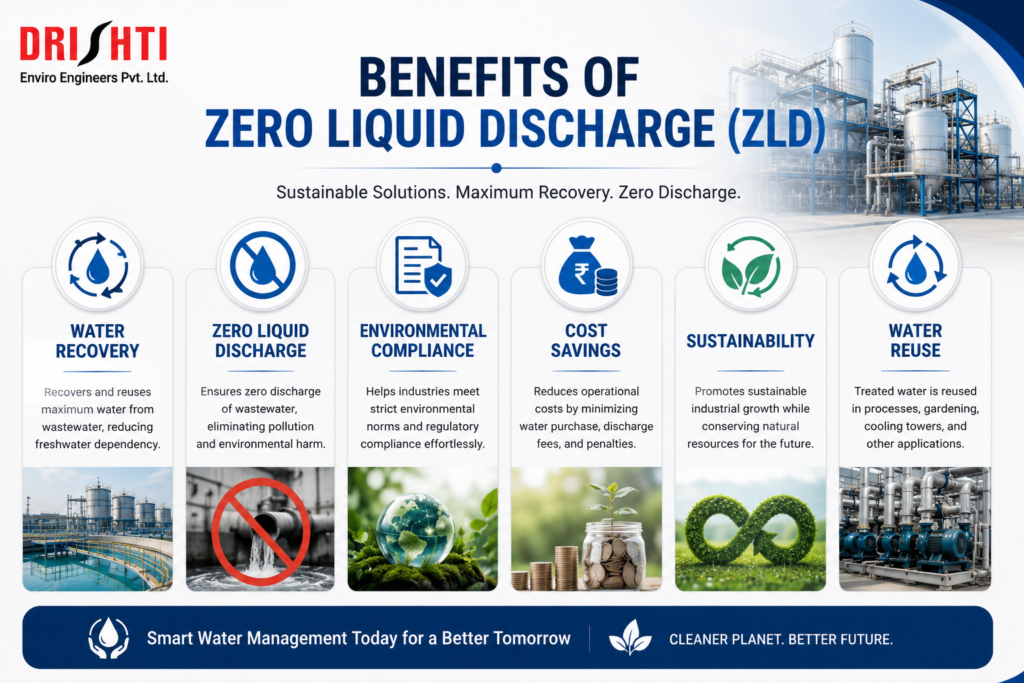
Long-term operational savings
Significant water conservation
Maximum wastewater recycling
Reduced environmental footprint
Improved regulatory compliance
Sustainable industrial operations
How to Choose the Right ZLD Solution
Before implementing a ZLD system, industries should evaluate:
- Wastewater characteristics
- Daily wastewater generation
- Water recovery goals
- Available installation space
- Operational and maintenance requirements
- Future production expansion
A customized solution ensures reliable performance and better return on investment.
Conclusion
Zero Liquid Discharge (ZLD) Solutions provide an effective and sustainable approach to industrial wastewater management for textile, pharmaceutical, and chemical industries. By recovering water, reducing waste, and supporting regulatory compliance, ZLD systems help industries achieve both environmental and operational goals. Choosing the right technology and system design is essential for maximizing efficiency and ensuring long-term sustainability.
Frequently Asked Questions
What is a Zero Liquid Discharge (ZLD) system?
A ZLD system treats industrial wastewater to recover reusable water and eliminate liquid discharge.
Which industries commonly use ZLD systems?
Textile, pharmaceutical, chemical, food processing, power, and other water-intensive industries.
What are the main benefits of ZLD?
Water recovery, regulatory compliance, reduced environmental impact, and sustainable wastewater management.
Can ZLD systems reduce freshwater consumption?
Yes. ZLD systems recover treated water for reuse, significantly reducing freshwater demand.
Is ZLD suitable for high-TDS wastewater?
Yes. ZLD is specifically designed to treat wastewater with high dissolved solids and recover maximum reusable water.
Contact Details :-
Phone: 9815564242
Email: drishtienviro1975@gmail.com
Address: Moti Nagar, Ludhiana, Punjab
Website: www.drishtienviro.in
Looking for a Reliable ZLD Manufacturer in Ludhiana?
Drishti Enviro Engineers Pvt. Ltd. delivers customized Zero Liquid Discharge (ZLD) solutions that help industries reduce freshwater consumption, recover valuable water resources, and achieve long-term environmental compliance through efficient wastewater treatment systems.
Drishti Enviro – Aapka Trusted Partner for a Cleaner Ludhiana!
Sewage Treatment Plant Manufacturer in LudhianaSewage Treatment Plant Manufacturer in Ludhiana
Sewage Treatment Plant Manufacturer in Ludhiana