
Water scarcity and stricter environmental regulations are pushing industries to adopt sustainable wastewater management solutions. One of the most effective approaches is Zero Liquid Discharge (ZLD), a process that ensures no wastewater leaves the industrial premises.
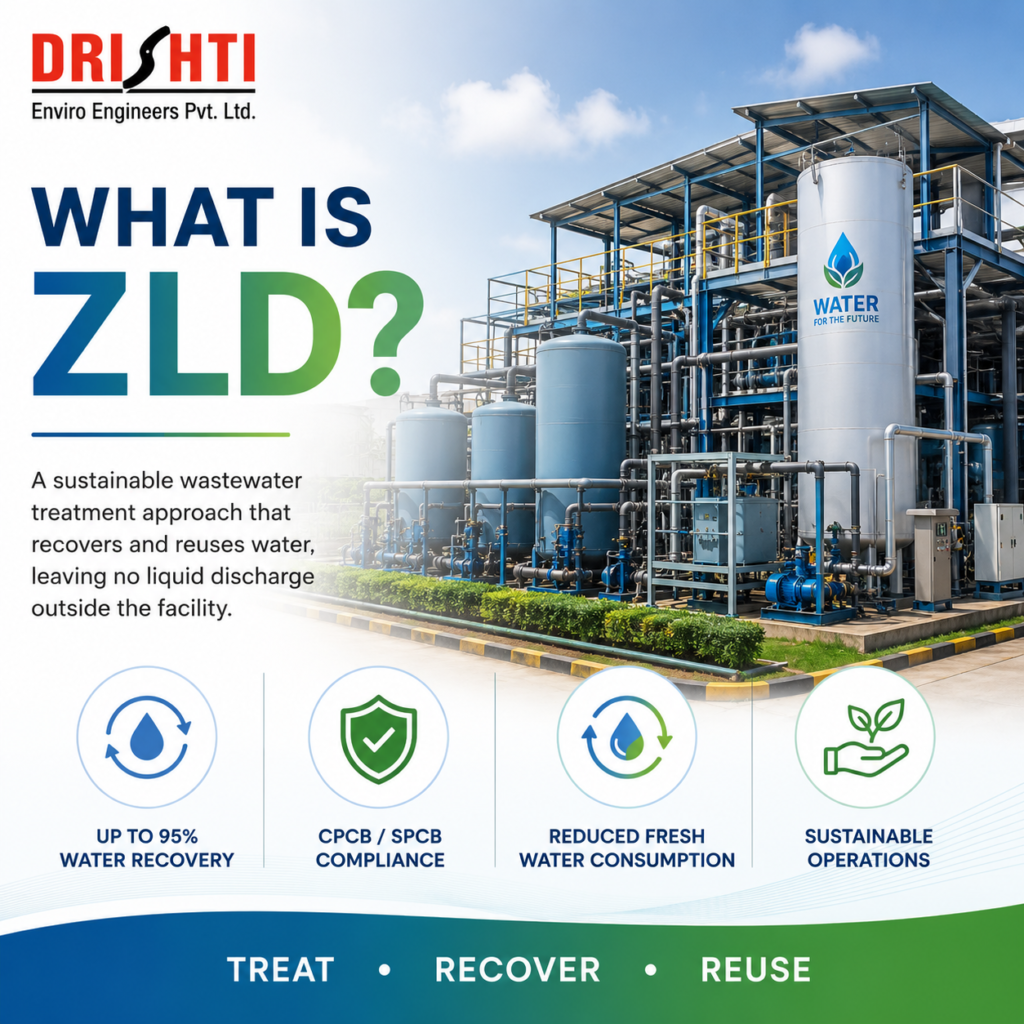
Industries generating high volumes of wastewater are increasingly implementing ZLD systems to meet Pollution Control Board requirements, reduce freshwater consumption, and improve environmental performance.
What is Zero Liquid Discharge (ZLD)?
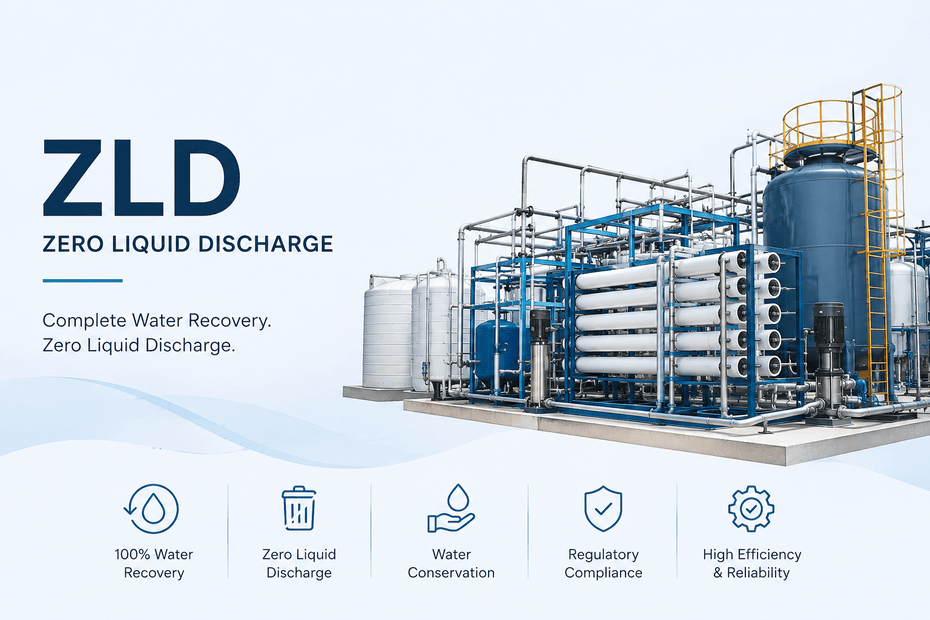
Zero Liquid Discharge (ZLD) is an advanced wastewater treatment process in which all wastewater is treated and recycled, leaving virtually no liquid waste for disposal.
The objective is simple:
- Recover maximum water for reuse
- Minimize environmental impact
- Eliminate wastewater discharge Comply with regulatory requirements
- Comply with regulatory requirements
In a ZLD system, treated water is reused within the facility while solid waste is safely disposed of according to environmental norms
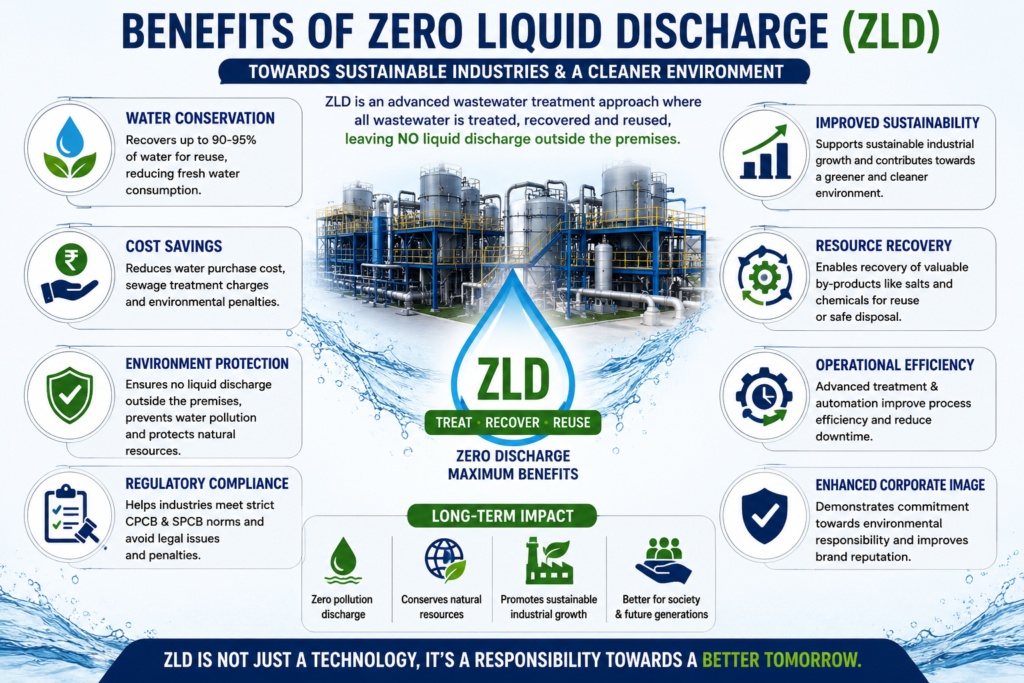
Benefits of ZLD Systems
Water Savings
Industries can recover and reuse up to 90–95% of wastewater, significantly reducing freshwater demand.
Regulatory Compliance
Helps meet Pollution Control Board and environmental compliance requirements.
Reduced Environmental Impact
Prevents contamination of rivers, groundwater, and surrounding ecosystems.
Lower Water Procurement Costs
Recycled water reduces dependence on external water sources.
Improved Sustainability
Supports ESG goals and sustainable industrial operations.
1. What is a Zero Liquid Discharge (ZLD) system?
A Zero Liquid Discharge (ZLD) system is an advanced wastewater treatment solution that recovers and recycles water, leaving little to no liquid waste for disposal. It helps industries maximize water reuse and improve environmental sustainability.
2. Which industries require a Zero Liquid Discharge (ZLD) system in Punjab?
Industries such as textile, pharmaceutical, chemical, food processing, dairy, electroplating, paper, and power plants often use ZLD systems to manage wastewater and support water reuse objectives.
3. What are the benefits of installing a ZLD system?
A ZLD system offers several advantages, including:
- High water recovery and reuse
- Reduced freshwater consumption
- Lower wastewater disposal
- Long-term operational savings
- Improved environmental performance
- Better resource efficiency
4. How do you choose the right ZLD system for an industry?
Selecting the right ZLD system depends on wastewater quality, daily flow, recovery targets, available space, operating costs, and industry-specific treatment requirements. A technical assessment helps determine the appropriate solution.
5. What technologies are used in Zero Liquid Discharge (ZLD) systems?
Most ZLD systems combine technologies such as ultrafiltration (UF), reverse osmosis (RO), evaporators, crystallizers, and sludge handling systems to recover water and separate dissolved solids efficiently.
6. How much water can a ZLD system recover?
Water recovery depends on wastewater characteristics and system design. Many modern ZLD systems are designed to achieve high water recovery rates, allowing industries to significantly reduce freshwater demand.
7. What is the difference between a ZLD system and an ETP?
An Effluent Treatment Plant (ETP) treats industrial wastewater before discharge or reuse, while a Zero Liquid Discharge (ZLD) system goes further by recovering water and minimizing or eliminating liquid discharge.
8. Does Drishti Enviro provide complete ZLD solutions in Punjab?
Yes. Drishti Enviro Engineers Pvt. Ltd. offers complete ZLD solutions, including system design, manufacturing, installation, commissioning, maintenance, and technical support for industries across Punjab.
9. What factors affect the cost of a ZLD system?
The overall cost depends on wastewater volume, contamination levels, treatment technology, automation requirements, installation complexity, and long-term operational needs.
10. Why should industries invest in a ZLD system?
A ZLD system helps industries recover valuable water resources, reduce dependence on freshwater, improve environmental compliance, and support sustainable industrial operations.
Why Choose Drishti Enviro?
Drishti Enviro is a trusted environmental engineering company offering end-to-end water and wastewater treatment solutions for industrial, commercial, and municipal projects.
Why Partner With Us?
- ✅ Customized Water Treatment Plant (WTP) solutions based on your water quality and industry requirements.
- ✅ Advanced Japanese Technology FRP STP systems with compact, plug-and-play design.
- ✅ Complete Zero Liquid Discharge (ZLD) solutions for water recovery and regulatory compliance.
- ✅ High-performance Industrial & Commercial RO Plants for purified process and drinking water.
- ✅ Turnkey services including design, manufacturing, installation, commissioning, and AMC support.
- ✅ Energy-efficient, reliable systems designed to meet CPCB and State Pollution Control Board guidelines.
Contact Details :-
Phone: 9815564242
Email: drishtienviro1975@gmail.com
Address: Moti Nagar, Ludhiana, Punjab
Website: www.drishtienviro.in
Drishti Enviro – Aapka Trusted Partner for a Cleaner Ludhiana!
Sewage Treatment Plant Manufacturer in LudhianaSewage Treatment Plant Manufacturer in Ludhiana
Sewage Treatment Plant Manufacturer in Ludhiana