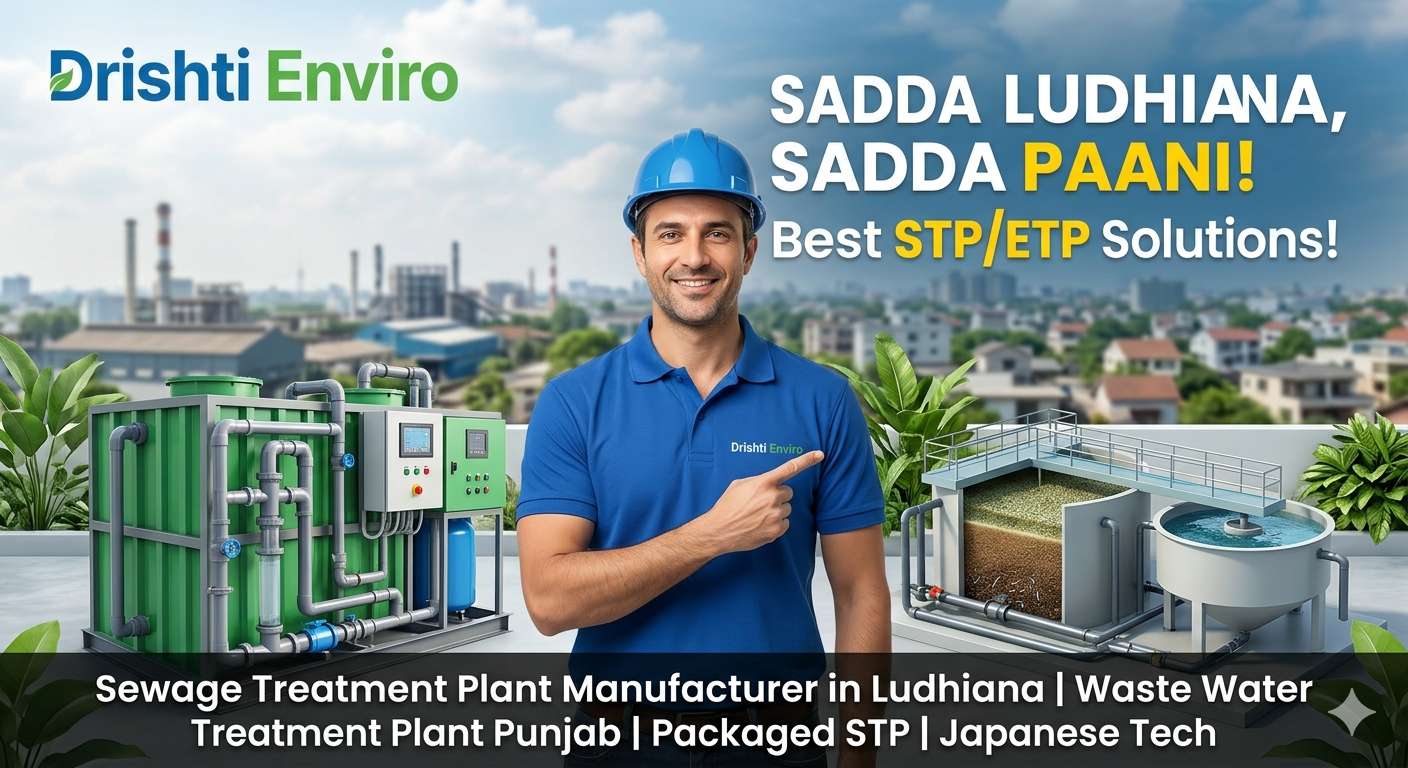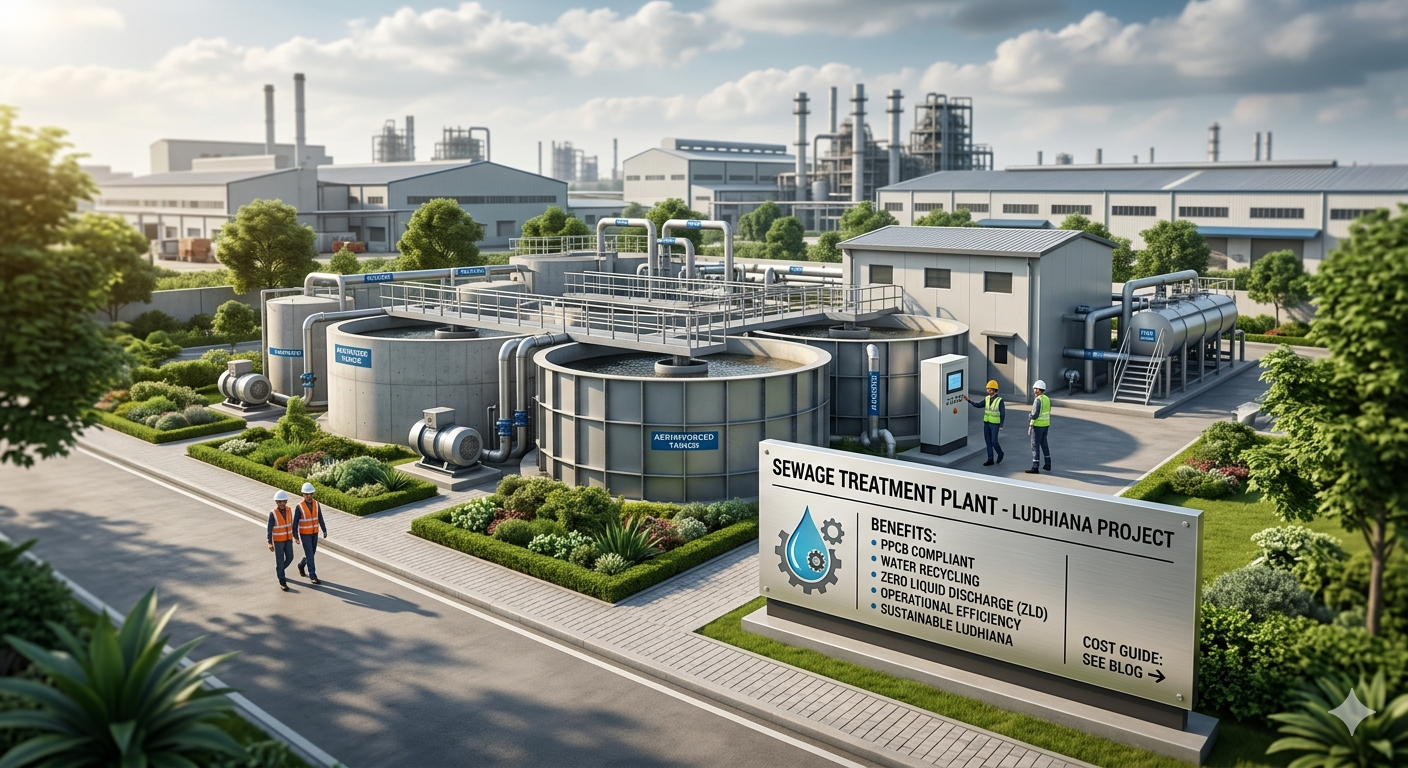

As someone who has spent over 15 years navigating the industrial corridors of Ludhiana—from the bustling hosiery units in Focal Point to the heavy manufacturing plants on GT Road—I’ve seen our city evolve. We are the “Manchester of India,” a title we wear with pride. But as an environmental engineer, I also see the silent price we pay for this progress: our water.
If you are running an industry in Ludhiana today, you know the pressure is mounting. The Punjab Pollution Control Board (PPCB) is stricter than ever, and the shadow of the Buddha Nullah pollution crisis looms large over all of us.
At Drishti Enviro Engineers Pvt. Ltd., we believe that a Sewage Treatment Plant for Industry in Ludhiana is no longer just a “checkbox” for compliance. It is a vital organ of your industrial operations. Let’s talk about why, how it works, and why your approach to wastewater needs to change in 2026.
The Ludhiana Reality: Why “Business as Usual” No Longer Works
Ludhiana’s industrial DNA is diverse—textiles, dyeing, cycle parts, auto components, and food processing. Each of these sectors generates vast amounts of wastewater. For years, many relied on common effluent treatment plants (CETPs) or, unfortunately, direct discharge.
However, the ground reality has shifted. Ground water levels in Punjab are receding at an alarming rate. Simultaneously, the PPCB has tightened the screws on “Zero Liquid Discharge” (ZLD) and stringent discharge norms.
Whether you are a textile giant or a medium-scale manufacturing unit, managing your domestic sewage—the waste from your staff quarters, canteens, and office washrooms—is just as critical as managing your industrial effluent. This is where an Industrial STP Ludhiana becomes your best friend.
Why Your Industry Needs a Dedicated STP (It’s Not Just About the ETP)
Many factory owners ask me, “Sir, we already have an Effluent Treatment Plant (ETP) for our chemical waste. Why do we need a separate Sewage Treatment Plant?”
It’s a valid question. Here is the local expert’s perspective:
- Biological Consistency: ETPs handle chemicals, dyes, and heavy metals. STPs handle organic, biological waste. Mixing the two often “shocks” the system, leading to treatment failure.
- Compliance: PPCB norms for sewage discharge are specific. Having a dedicated Sewage treatment plant Punjab-compliant system ensures you never face those dreaded “Show Cause” notices.
- The “Resource” Mindset: We need to stop looking at sewage as “ganda paani” (dirty water) and start seeing it as a source of recycled water.
How a Modern STP Works (Without the Boring Textbook Talk) Shutterstock Explore
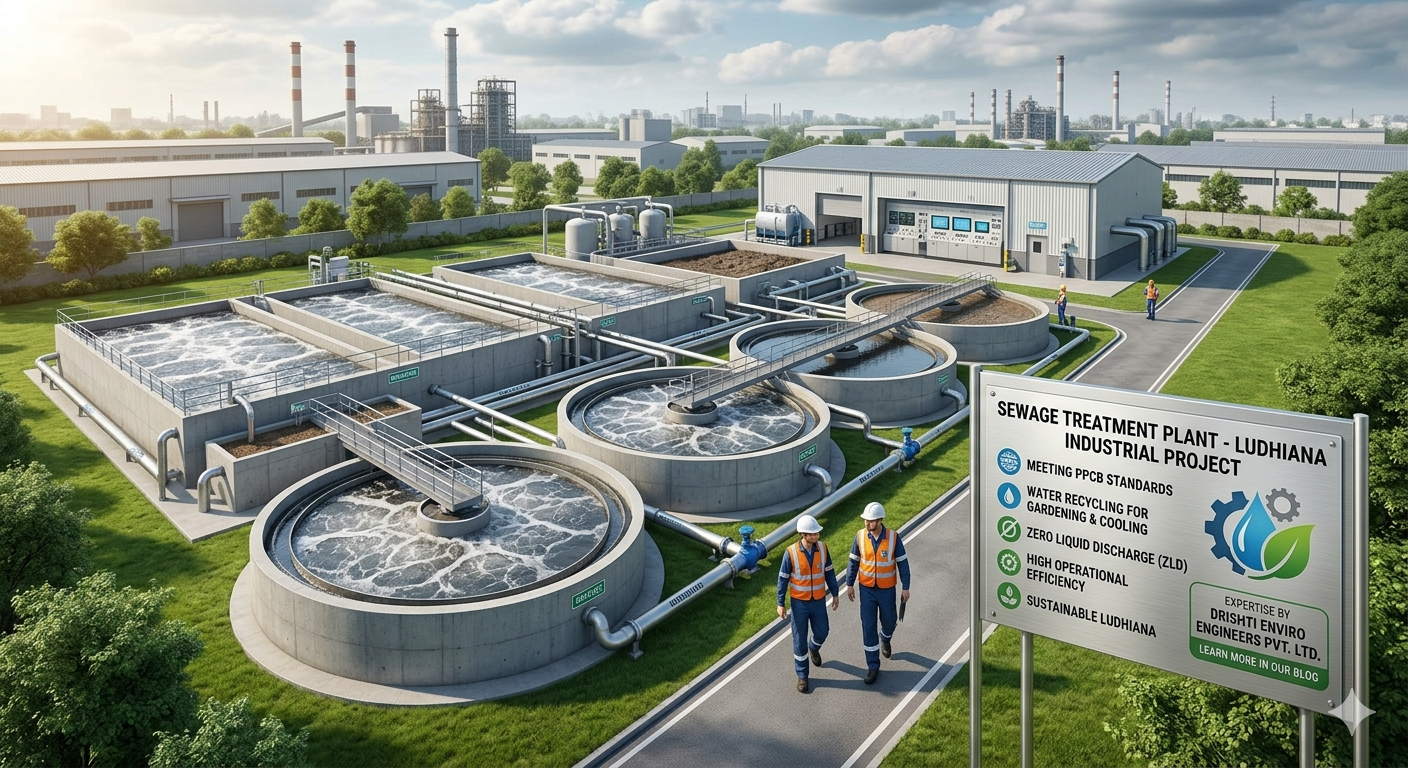
In my 15 years of field experience, I’ve found that the best systems are those that mimic nature but at a high speed. A modern Wastewater treatment plant Ludhiana installation generally follows three stages:
1. Primary Treatment (The Physical Filter)
Think of this as a giant strainer. We remove the big stuff—plastics, rags, grit, and oil. If you don’t catch these here, they ruin your expensive pumps later.
2. Secondary Treatment (The “Living” Heart)
This is where the magic happens. We use “good” bacteria to eat the organic waste in the water. In Ludhiana, we typically use three main technologies:
- MBBR (Moving Bed Biofilm Reactor): Great for industries with space constraints. It uses small plastic carriers (media) for bacteria to grow on. It’s “set and forget” for the most part.
- SBR (Sequential Batch Reactor): A smart, time-based system. It’s like a washing machine—it fills, treats, settles, and decants in cycles. Very high efficiency.
- MBR (Membrane Bioreactor): This is the “Mercedes” of STPs. It uses membranes to filter out even the tiniest particles. The water coming out is crystal clear.
3. Tertiary Treatment (The Final Polish)
The water is filtered through sand and carbon, and then disinfected using Chlorine or UV. At this stage, the water is safe, odorless, and ready for reuse.
The Drishti Enviro Advantage: Why Local Expertise Matters
Choosing an STP manufacturer Ludhiana can be overwhelming. You’ll find many “fly-by-night” operators who promise the world but disappear when a pump fails at 2 AM.
At Drishti Enviro Engineers, we’ve built our reputation on being present on the ground. Here is how we do things differently:
- Customized Solutions: We don’t sell “box products.” We analyze your specific water load, the space you have behind your boiler room or shed, and your budget before designing.
- Built for Punjab’s Conditions: Our designs account for local factors—like our extreme temperature variations (45°C summers and 2°C winters) which affect bacterial growth.
- Low Maintenance, High Reliability: We use heavy-duty components. In an industrial setting, equipment takes a beating; we ensure your STP can handle it.
- Seamless PPCB Compliance: We know the paperwork and the parameters (BOD, COD, TSS) like the back of our hand. We build to ensure you pass every inspection with flying colors.
Real Benefits: Beyond Saving the Environment
Let’s talk business. Investing in a Sewage Treatment Plant for Industry in Ludhiana is a financial decision.
- Massive Water Savings: Why buy tankers of fresh water for your lawns or cooling towers? Your treated sewage water is perfect for gardening, toilet flushing, and certain industrial cooling processes.
- Reduced Electricity Bills: Modern STPs from Drishti Enviro are designed with energy-efficient blowers and motors.
- Zero Fines: The cost of one PPCB fine or a temporary “closure” order is often higher than the cost of installing an STP.
- Brand Value: Today’s global buyers (especially in the textile and auto sectors) audit your green credentials. A well-maintained STP is a badge of honor during international audits.
From the Field: A Ludhiana Case Study
Last year, I worked with a mid-sized manufacturing unit in Sahnewal. They were struggling with high water costs and were constantly worried about their discharge into the local drain.
We installed a compact Industrial STP Ludhiana system for them. Within six months:
- They stopped purchasing 15,000 liters of fresh water daily for their green belt.
- The “smell” issue that plagued their staff canteen area vanished.
- During a routine PPCB check, their samples were well within the 10 mg/l BOD limit.
The owner told me, “Engineer Sahab, the peace of mind is worth more than the plant’s cost.” That is the reality of a good installation.
Conclusion: Making the Smart Move
In 2026, we have to realize that Ludhiana’s resources are not infinite. As industry leaders, the responsibility of the Buddha Nullah and our groundwater rests on our shoulders.
An STP is no longer just a pipe and a tank; it is a statement that your business is modern, responsible, and sustainable. Whether you are looking for a new installation or want to upgrade your existing, underperforming plant, Drishti Enviro Engineers Pvt. Ltd. is here to help.
Don’t wait for a regulation to force your hand. Be a leader in Ludhiana’s green industrial revolution.
Ready to discuss your site’s requirements? Let’s walk through your plant together and find a solution that works for your business and our environment.
Contact Drishti Enviro Engineers today—Your local partner for excellence in wastewater treatment.