
Drishti Enviro Engineers Pvt. Ltd. is a trusted Effluent Treatment Plant (ETP) manufacturer in India, delivering customized industrial wastewater treatment solutions for businesses of all sizes. Our ETP systems are designed to effectively remove pollutants, suspended solids, chemicals, oils, organic matter, and other contaminants from industrial effluents, ensuring compliance with CPCB and State Pollution Control Board (SPCB) regulations. We provide complete turnkey services, including design, engineering, manufacturing, installation, commissioning, operation, and maintenance, tailored to the specific wastewater characteristics of each industry.
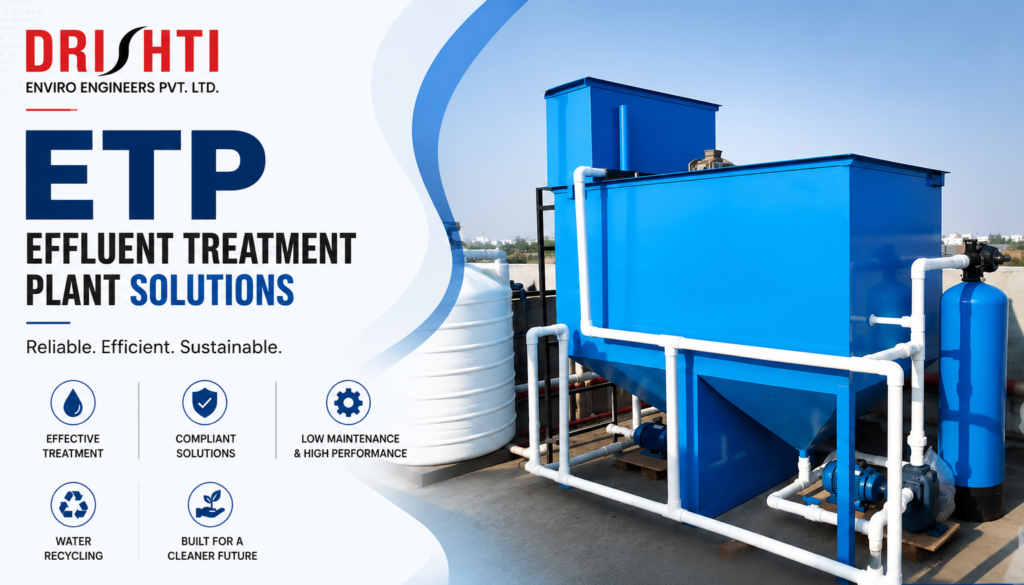
Our advanced ETP solutions serve a wide range of industries, including textile, pharmaceutical, dairy, food processing, chemical, paper, electroplating, automobile, and manufacturing sectors. By integrating proven treatment technologies such as physico-chemical treatment, biological treatment, MBBR, MBR, SBR, tertiary filtration, and water recycling systems, we help industries reduce environmental impact, optimize water reuse, lower operational costs, and achieve long-term sustainability. Whether you require a new ETP installation or an upgrade to an existing system, our experienced engineering team delivers reliable, energy-efficient, and high-performance solutions that meet your operational and regulatory requirements.
Why is an Effluent Treatment Plant (ETP) Important?
Industrial processes generate wastewater containing pollutants such as suspended solids, chemicals, oils, heavy metals, organic matter, and toxic contaminants that can harm the environment if discharged untreated. An Effluent Treatment Plant (ETP) treats this wastewater to meet CPCB and State Pollution Control Board (SPCB) discharge standards, protecting natural water resources and ensuring legal compliance. Beyond regulatory requirements, an efficient ETP enables industries to recycle and reuse treated water, reduce freshwater consumption, lower operational costs, and support sustainable manufacturing practices. Investing in a well-designed ETP not only safeguards the environment but also enhances operational efficiency and strengthens a company’s commitment to environmental responsibility.
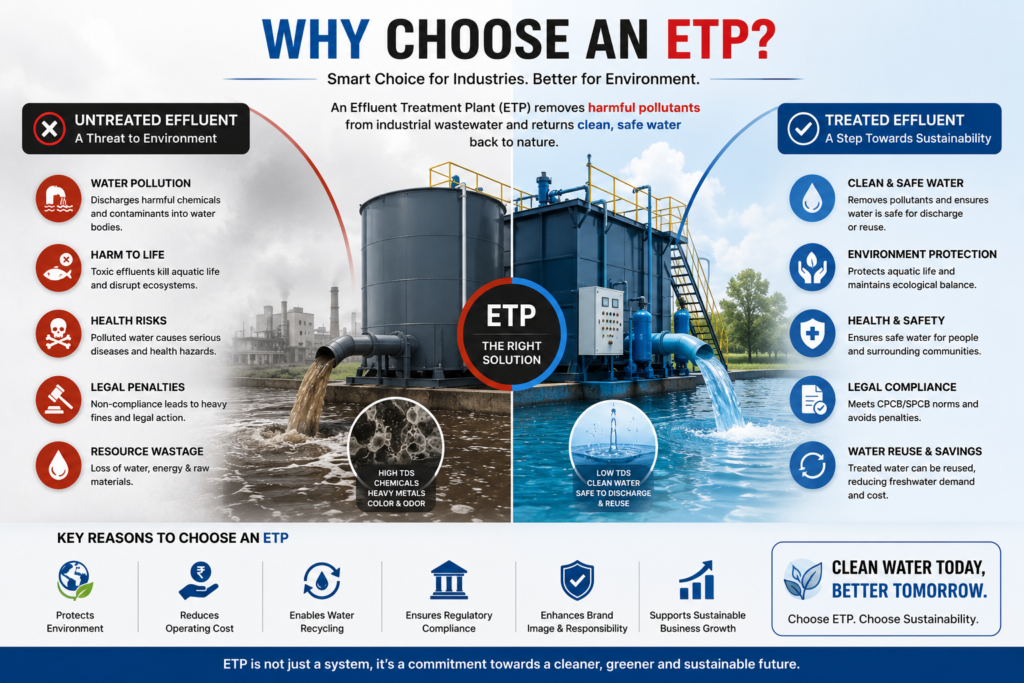
Key Benefits of an Effluent Treatment Plant
- Ensures compliance with CPCB & SPCB environmental regulations.
- Removes harmful pollutants, chemicals, oils, and suspended solids from industrial wastewater.
- Reduces water consumption through recycling and reuse.
- Protects rivers, lakes, and groundwater from industrial pollution.
- Improves operational efficiency with reliable wastewater treatment.
- Supports sustainable and environmentally responsible manufacturing.
- Reduces the risk of environmental penalties and legal issues.
- Customizable for industries such as textile, pharmaceutical, dairy, food processing, chemical, paper, and more.
Industries We Serve with Our Effluent Treatment Plants
Every industry generates wastewater with unique characteristics, requiring a customized treatment approach. At Drishti Enviro Engineers Pvt. Ltd., we design and manufacture Effluent Treatment Plants (ETPs) tailored to the specific wastewater composition, production capacity, and environmental compliance requirements of each industry. Our solutions are engineered to deliver reliable performance, efficient pollutant removal, and long-term operational savings.
Industries & ETP Applications
| Industry | Wastewater Characteristics | Recommended ETP Solution |
|---|---|---|
| Textile Industry | Dyes, chemicals, high COD/BOD, color | Physico-Chemical + Biological Treatment |
| Pharmaceutical Industry | Complex organic compounds, solvents, APIs | Advanced Biological + Tertiary Treatment |
| Dairy Industry | Milk solids, fats, proteins, high BOD | Biological Treatment (MBBR/SBR) |
| Food Processing Industry | Organic waste, oils, grease | Biological + Filtration System |
| Chemical Industry | Hazardous chemicals, acids, alkalis | Physico-Chemical Treatment + Neutralization |
| Paper & Pulp Industry | Fibers, suspended solids, lignin | Clarification + Biological Treatment |
| Electroplating Industry | Heavy metals, chromium, nickel | Chemical Treatment + Sludge Handling |
| Automobile Industry | Oil, grease, paint residues | Oil Separation + Physico-Chemical Treatment |
| Distillery & Brewery | High organic load, spent wash | High-Rate Biological Treatment |
| Hospitals & Healthcare | Laboratory wastewater, disinfectants | Biological + Disinfection System |
Working Process of an Effluent Treatment Plant (ETP)
An Effluent Treatment Plant (ETP) treats industrial wastewater through a series of physical, chemical, and biological processes to remove contaminants before the treated water is safely discharged or reused. The treatment process is customized based on the wastewater characteristics and industry requirements, ensuring compliance with CPCB and State Pollution Control Board (SPCB) norms.
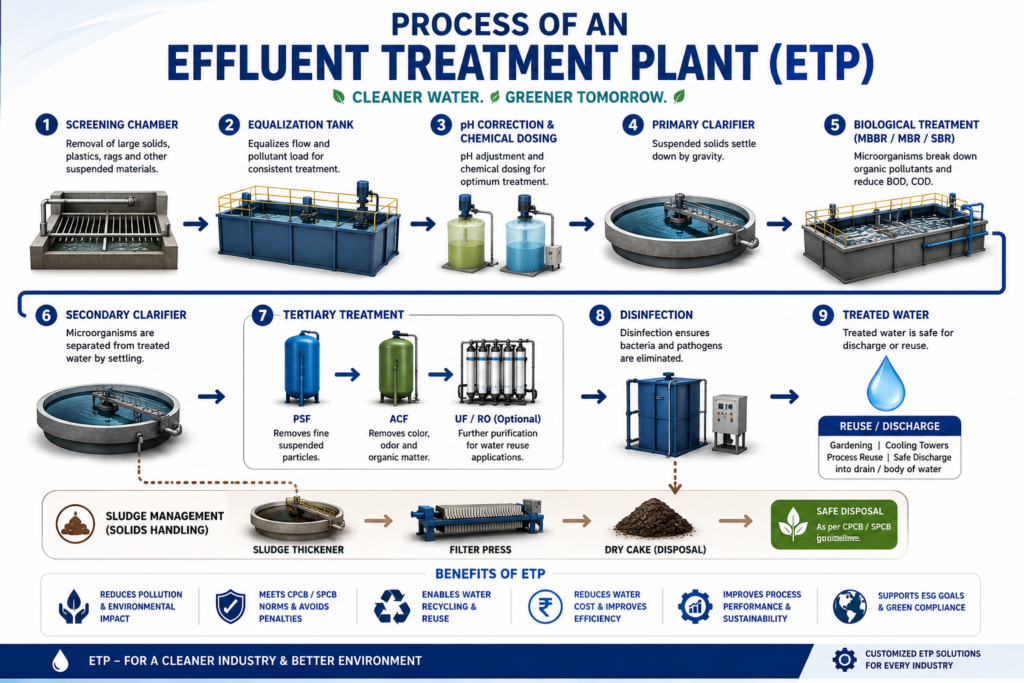
ETP Working Process
| Stage | Process | Purpose |
|---|---|---|
| 1. Collection Tank | Wastewater from different industrial processes is collected. | Equalizes the flow and ensures a continuous supply to the treatment system. |
| 2. Screening | Large solids, plastics, cloth, and debris are removed using bar screens. | Protects pumps and downstream equipment from damage. |
| 3. Oil & Grease Separation | Oil separators or skimmers remove floating oils and grease. | Prevents interference with the treatment process and improves efficiency. |
| 4. Equalization Tank | Wastewater is mixed to balance flow rate, pH, and pollutant concentration. | Provides consistent influent quality for effective treatment. |
| 5. pH Correction & Chemical Dosing | Acids, alkalis, coagulants, and flocculants are added as required. | Neutralizes pH and prepares wastewater for contaminant removal. |
| 6. Primary Clarifier | Heavy suspended solids settle at the bottom while floating materials are removed. | Reduces Total Suspended Solids (TSS) and organic load. |
| 7. Biological Treatment | Microorganisms break down biodegradable organic pollutants using technologies like MBBR, MBR, or SBR. | Reduces Biological Oxygen Demand (BOD) and Chemical Oxygen Demand (COD). |
| 8. Secondary Clarifier | Biomass and biological sludge settle, separating treated water. | Produces clear effluent and recovers sludge for further treatment. |
| 9. Tertiary Treatment | Pressure Sand Filter (PSF), Activated Carbon Filter (ACF), UF, or RO systems remove fine impurities. | Improves water quality for reuse or compliant discharge. |
| 10. Disinfection & Water Reuse | UV, chlorination, or ozone treatment eliminates harmful microorganisms. | Ensures safe discharge or recycling of treated water for industrial use. |
| 11. Sludge Treatment | Sludge is thickened, dewatered, and disposed of or reused as per regulations. | Reduces waste volume and ensures environmentally responsible disposal. |
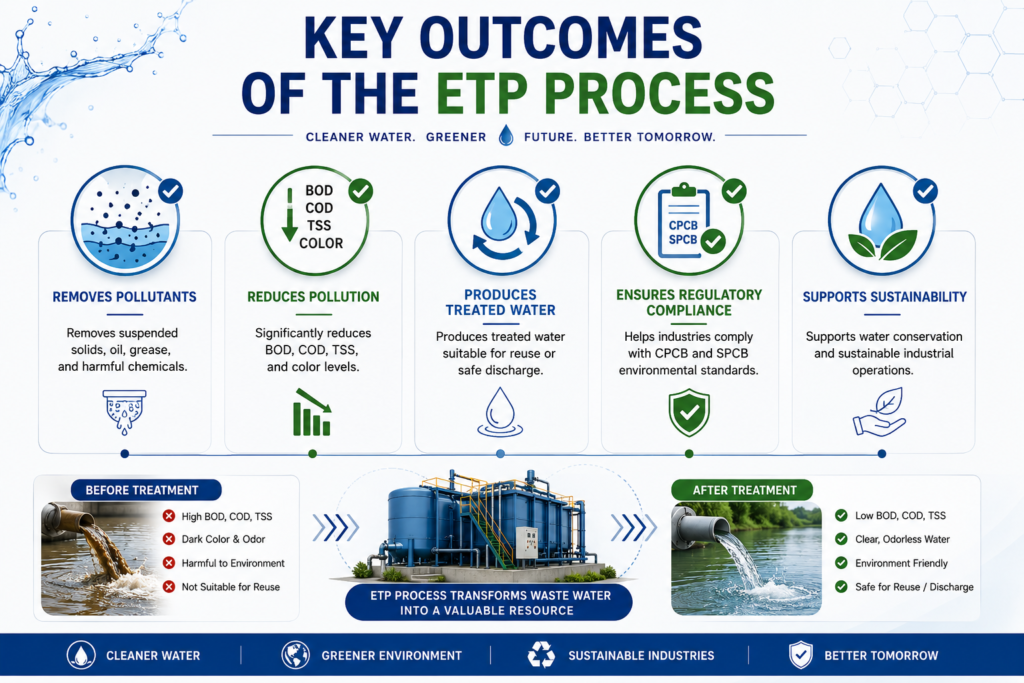
Key Outcomes of the ETP Process
- Removes suspended solids, oil, grease, and harmful chemicals.
- Significantly reduces BOD, COD, TSS, and color levels.
- Produces treated water suitable for reuse or safe discharge.
- Helps industries comply with CPCB and SPCB environmental standards.
- Supports water conservation and sustainable industrial operations.
Frequently Asked Questions (FAQs)
1. What is an Effluent Treatment Plant (ETP)?
An ETP treats industrial wastewater by removing pollutants, chemicals, oils, and suspended solids before safe discharge or reuse.
2. Which industries need an ETP?
ETPs are commonly used in textile, pharmaceutical, dairy, food processing, chemical, paper, automobile, and manufacturing industries.
3. What are the benefits of an ETP?
An ETP helps industries comply with CPCB/SPCB norms, reduce pollution, recycle water, and lower operating costs.
4. Can treated water be reused?
Yes. Treated water can be reused for cooling, flushing, gardening, cleaning, and various industrial processes, depending on the treatment level.
5. What technologies are used in an ETP?
Common technologies include Physico-Chemical Treatment, MBBR, MBR, SBR, ASP, PSF, ACF, UF, and RO.
6. Does Drishti Enviro Engineers provide turnkey ETP solutions?
Yes. We offer complete ETP solutions, including design, manufacturing, installation, commissioning, AMC, and maintenance support across India.
Conclusion
An Effluent Treatment Plant (ETP) is an essential investment for industries looking to manage wastewater responsibly, comply with environmental regulations, and promote sustainable operations. At Drishti Enviro Engineers Pvt. Ltd., we provide customized, high-performance ETP solutions tailored to the unique requirements of textile, pharmaceutical, dairy, food processing, chemical, and other industrial sectors. From design and manufacturing to installation and after-sales support, our expert team delivers reliable, energy-efficient, and CPCB/SPCB-compliant wastewater treatment systems that help businesses achieve long-term operational efficiency and environmental compliance.
Looking for a reliable ETP solution? Contact Drishti Enviro Engineers Pvt. Ltd. today for expert consultation and a customized industrial wastewater treatment system.
Why Choose Drishti Enviro Engineers Pvt. Ltd.?
- Customized Industrial & Commercial RO Plant Solutions
- High-Quality Components & Advanced Technology
- Leading STP Manufacturer in Ludhiana
- Advanced Japanese Technology Packaged STP Solutions
- Zero Liquid Discharge (ZLD) Solutions for Water Reuse
- End-to-End Design, Manufacturing & Installation
- Experienced Engineering & Technical Team
- Energy-Efficient & Cost-Effective Systems
- Reliable After-Sales Support & AMC
- Timely Project Delivery Across India
Contact Details :-
Phone: 9815564242
Email: drishtienviro1975@gmail.com
Address: Moti Nagar, Ludhiana, Punjab
Website: www.drishtienviro.in