
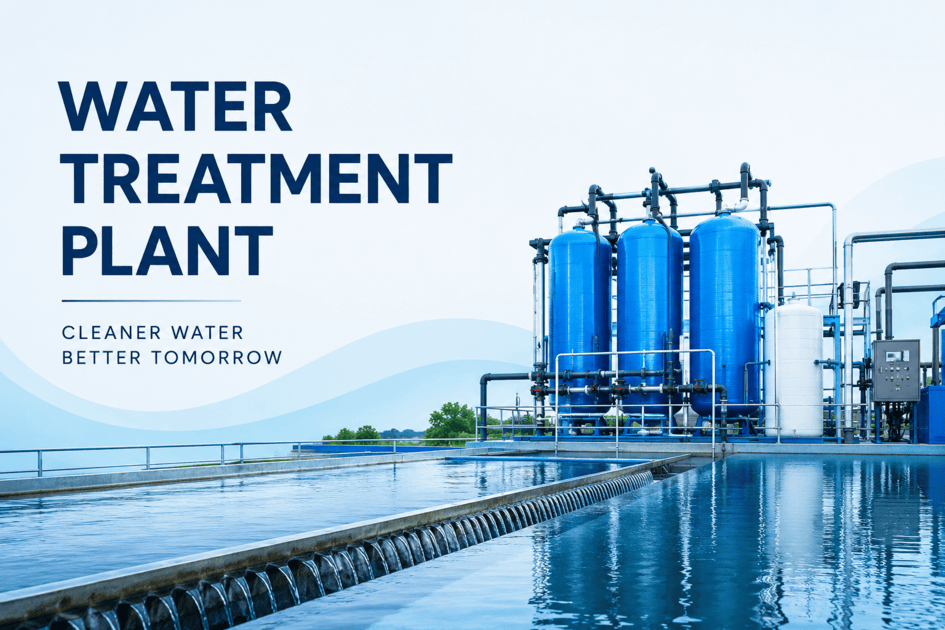
Water Treatment Plant (WTP) is designed to remove impurities, suspended solids, bacteria, chemicals, and other contaminants from raw water to make it suitable for industrial, commercial, or drinking purposes. Whether you need an industrial water treatment plant, an RO water treatment plant, or a drinking water treatment plant, choosing the right technology and manufacturer is essential for long-term performance, water quality, and regulatory compliance.
What Is a Water Treatment Plant (WTP)?
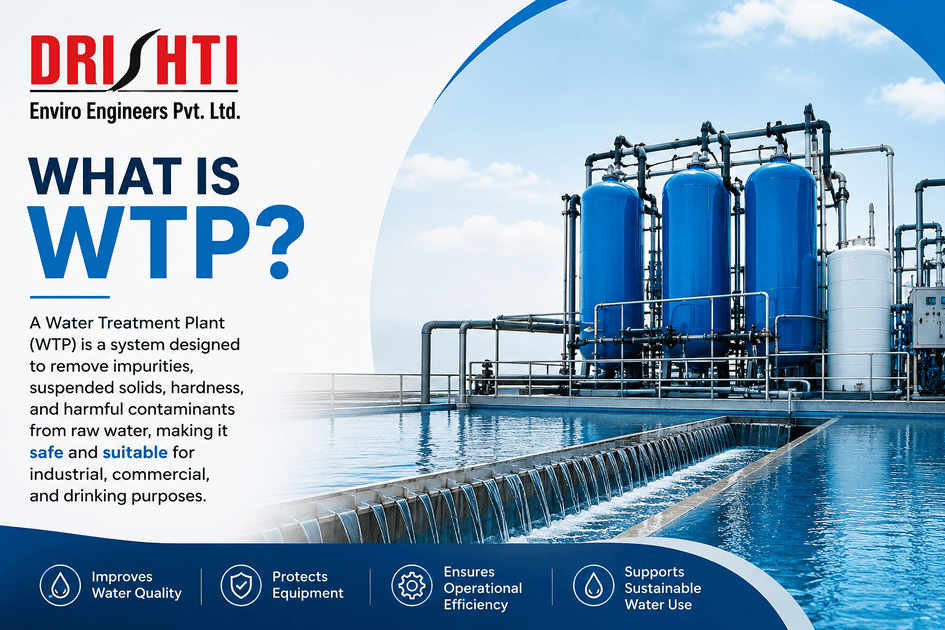
A Water Treatment Plant (WTP) is a system designed to remove suspended solids, dissolved salts, hardness, and microbiological contaminants from raw water before it is used. It is different from an ETP (Effluent Treatment Plant), which treats wastewater generated after industrial use — a WTP treats water before it enters your process.
WTPs are used across:
- Manufacturing and process industries (textiles, pharma, food & beverage, chemicals)
- Power plants and boiler feed water systems
- Residential townships and commercial complexes
- Hospitals and healthcare facilities
- Municipal drinking water supply
How a Water Treatment Plant Works
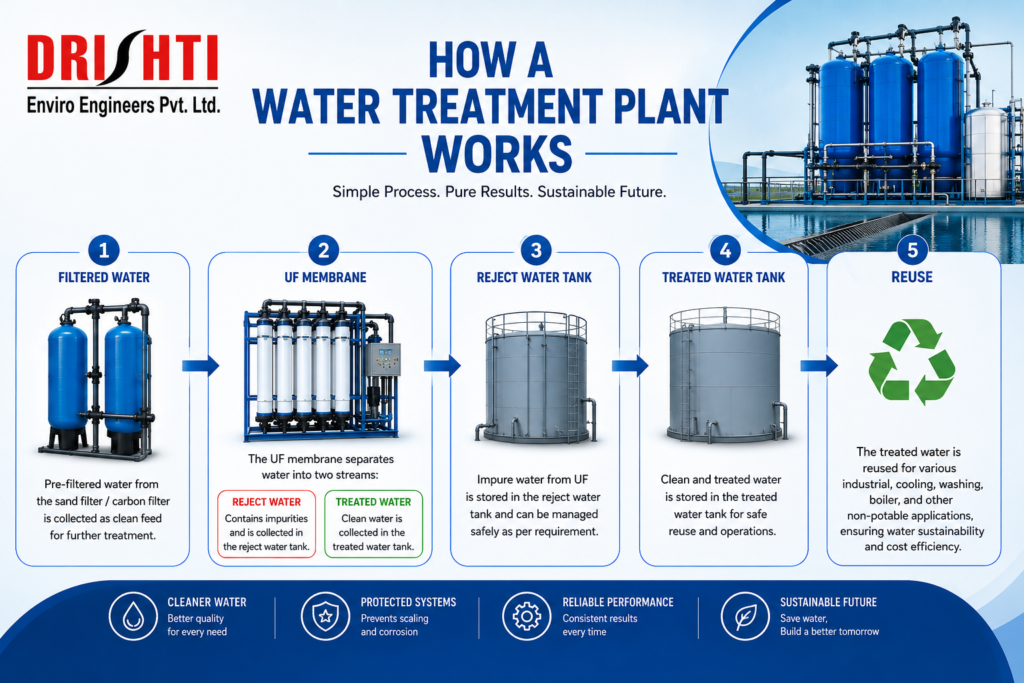
1. Screening & Pre-Treatment
Removes large debris and suspended particles from raw water using screens and settling tanks.
2. Coagulation & Flocculation
Chemical dosing binds fine particles into larger, easily removable flocs.
3. Sedimentation / Clarification
Flocs settle out in a clarifier, leaving clearer water for the next stage.
4. Filtration
Water passes through sand, multi-media, or activated carbon filters to remove remaining turbidity, odor, and organic matter.
5. Softening (where required)
Ion-exchange softeners remove calcium and magnesium hardness, protecting boilers and process equipment from scaling.
6. Reverse Osmosis (RO)
Reduces dissolved salts (TDS) to meet process-grade or drinking water standards — often the core stage of an RO water treatment plant.
7. Disinfection
UV treatment, chlorination, or ozonation eliminates bacteria and pathogens for safe use.
8. Storage & Distribution
Treated water is stored and distributed to points of use across the facility.
Key Benefits of a Water Treatment Plant for Industries
- Equipment Protection – Prevents scaling and corrosion in boilers, chillers, and pipelines, extending machinery life.
- Consistent Product Quality – Critical for industries like pharma, food & beverage, and textiles where water quality directly affects output.
- Regulatory Compliance – Meets drinking water and process water standards set by pollution control boards and health authorities.
- Lower Operating Costs – Reduces chemical consumption, energy use, and unplanned maintenance over time.
- Water Security – Reduces dependency on external water sources through better-quality, reliable in-house treatment.
- Sustainability – Supports responsible water use and, when paired with recycling systems, reduces overall freshwater demand.
Types of Water Treatment Plants
| Type | Best Suited For |
|---|---|
| RO Based WTP | High-TDS borewell/groundwater, drinking water, process water |
| Conventional (Clarifier + Filter) WTP | Surface water sources like rivers, lakes, reservoirs |
| Softening Plant | Boiler feed water, reducing hardness-related scaling |
| UF (Ultrafiltration) Based WTP | Removing bacteria, viruses, and turbidity without chemicals |
| Package/Containerized WTP | Sites needing quick deployment with limited space |
| Municipal WTP | Large-scale drinking water supply for cities and townships |
How to Choose the Right WTP Manufacturer
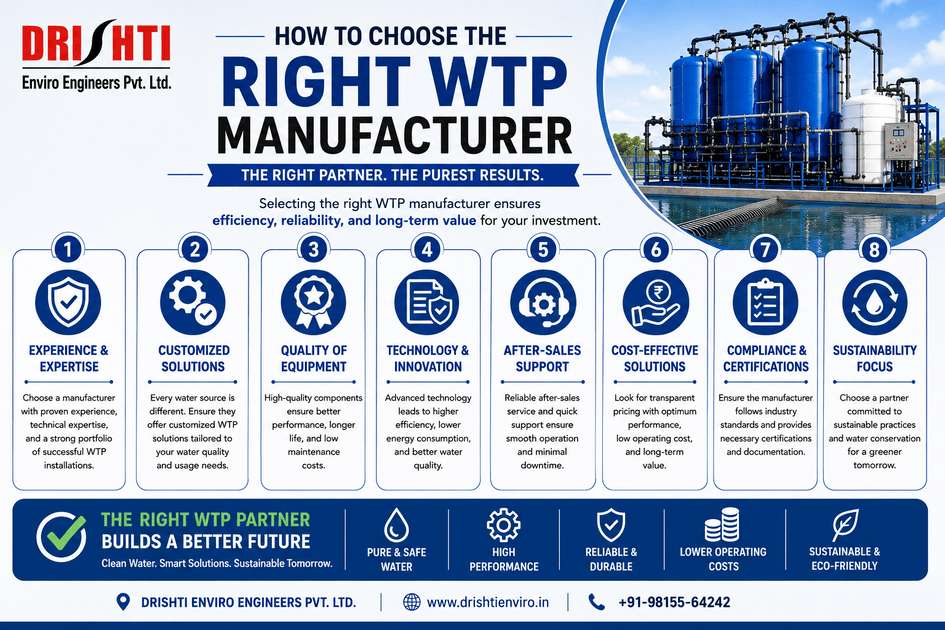
- ✅ Experience with your specific industry and raw water source
- ✅ Custom design based on your water analysis report — not a one-size-fits-all system
- ✅ Quality of core equipment (pumps, membranes, dosing systems, instrumentation)
- ✅ After-sales service, AMC support, and spare parts availability
- ✅ Compliance with CPCB/state pollution control board norms
- ✅ Turnkey capability — from design and installation to commissioning and O&M
Frequently Asked Questions (FAQs)
Q1. What is the cost of setting up a Water Treatment Plant? Cost depends on capacity (KLD), raw water quality, treatment technology, and automation level. A detailed water analysis is needed for an accurate quote.
Q2. What is the difference between a WTP and an RO plant? An RO plant is often one component within a larger WTP, specifically used to reduce dissolved salts (TDS) beyond what conventional filtration can achieve.
Q3. How much space does a WTP require? This varies by capacity and technology — package/containerized plants need minimal space, while conventional clarifier-based systems require more area.
Q4. How often does a WTP need maintenance? Routine maintenance (filter cleaning, membrane checks, dosing calibration) is typically monthly, with major servicing annually, depending on raw water quality and usage.
Conclusion
A well-designed Water Treatment Plant is the foundation of reliable, compliant, and cost-efficient water use — whether for drinking, manufacturing, or process applications. Choosing the right technology and an experienced manufacturer ensures your plant performs efficiently for years with minimal downtime.
Looking for a customized WTP solution? We design, manufacture, install, and maintain STP, ETP, WTP, and ZLD systems tailored to your industry’s needs. [Get in touch] for a free consultation and water analysis
Why Choose Drishti Enviro?
Drishti Enviro is a trusted environmental engineering company offering end-to-end water and wastewater treatment solutions for industrial, commercial, and municipal projects.
Why Partner With Us?
- ✅ Customized Water Treatment Plant (WTP) solutions based on your water quality and industry requirements.
- ✅ Advanced Japanese Technology FRP STP systems with compact, plug-and-play design.
- ✅ Complete Zero Liquid Discharge (ZLD) solutions for water recovery and regulatory compliance.
- ✅ High-performance Industrial & Commercial RO Plants for purified process and drinking water.
- ✅ Turnkey services including design, manufacturing, installation, commissioning, and AMC support.
- ✅ Energy-efficient, reliable systems designed to meet CPCB and State Pollution Control Board guidelines.
Contact Details :-
Phone: 9815564242
Email: drishtienviro1975@gmail.com
Address: Moti Nagar, Ludhiana, Punjab
Website: www.drishtienviro.in
Drishti Enviro – Aapka Trusted Partner for a Cleaner Ludhiana!