
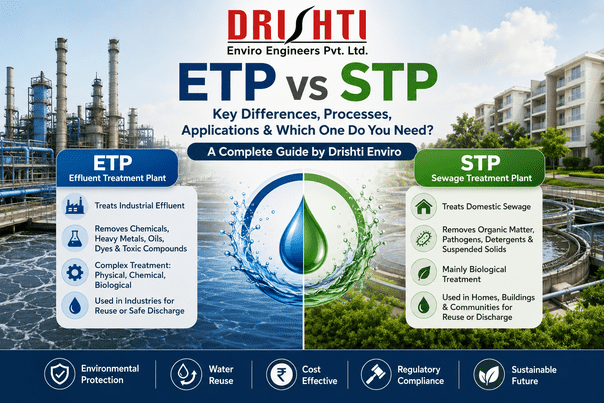
ETP vs STP is one of the most searched topics among builders, architects, consultants, industries, and project developers planning wastewater treatment systems. While both Effluent Treatment Plants (ETP) and Sewage Treatment Plants (STP) are designed to treat wastewater before discharge or reuse, they serve completely different purposes. Understanding the ETP vs STP difference helps you choose the right wastewater treatment solution for your residential, commercial, or industrial project.
Choosing the wrong wastewater treatment system can lead to poor treatment efficiency, increased operational costs, difficulty in meeting pollution control standards, and unnecessary maintenance expenses. Therefore, understanding the difference between ETP vs STP is essential before selecting a wastewater treatment plant for your facility.
In this comprehensive guide, Drishti Enviro explains the complete comparison between Effluent Treatment Plants (ETPs) and Sewage Treatment Plants (STPs), including their working principles, treatment processes, applications, technologies, advantages, costs, and the factors to consider when choosing the right system.
Why Wastewater Treatment Matters in 2026
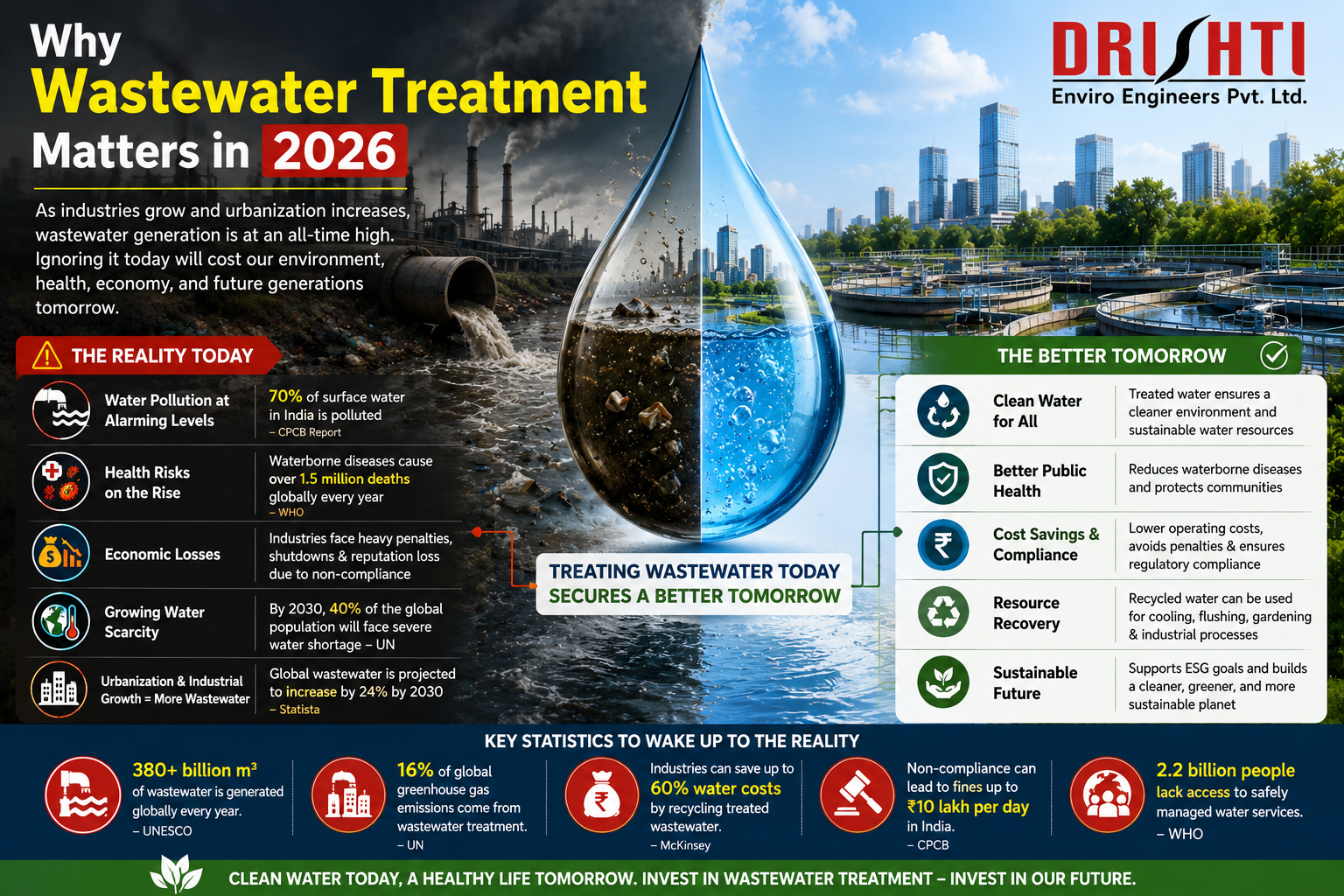
Untreated wastewater contains harmful contaminants like suspended solids, organic matter, bacteria, oils, heavy metals, chemicals, detergents, and nutrients. Releasing it directly harms ecosystems, spreads diseases, pollutes rivers and groundwater, and violates norms set by bodies like the Central Pollution Control Board (CPCB) in India.
Key benefits of a properly designed treatment plant:
- Environmental protection and compliance.
- Water reuse for gardening, flushing, cooling, or industrial processes.
- Reduced freshwater consumption.
- Lower long-term operational costs.
- Enhanced corporate sustainability image.
What is an STP (Sewage Treatment Plant)?
STP stands for Sewage Treatment Plant. It treats domestic sewage from households, apartments, hotels, hospitals, offices, and schools.
Primary Pollutants: Organic matter (BOD & COD), suspended solids, pathogens (bacteria, viruses), detergents, and nutrients (nitrogen, phosphorus).
Typical Capacity: Small to medium scale (KLD to MLD).
What is an ETP (Effluent Treatment Plant)?
ETP stands for Effluent Treatment Plant. It treats industrial effluent from factories, textile mills, chemical plants, pharmaceutical units, food processing, and other manufacturing facilities.
Primary Pollutants: Chemicals, dyes, heavy metals (chromium, lead, etc.), oils, acids, alkalis, toxic compounds, and high TDS/COD.
Typical Capacity: Varies widely based on industry (often higher complexity).
ETP vs STP: Key Differences at a Glance
| Feature | STP (Sewage Treatment Plant) | ETP (Effluent Treatment Plant) |
|---|---|---|
| Primary Purpose | Treat domestic sewage | Treat industrial effluent |
| Wastewater Source | Homes, apartments, hotels, hospitals, offices, schools | Factories, textile mills, chemical plants, pharmaceutical industries |
| Type of Pollutants | Organic matter, detergents, suspended solids, pathogens | Chemicals, oils, heavy metals, dyes, acids, alkalis, toxic compounds |
| Treatment Process | Mainly biological with physical treatment | Physical, chemical, and biological treatment |
| Treatment Complexity | Moderate | High |
| Operating Cost | Lower | Higher |
| Water Reuse | Gardening, flushing, landscaping, cooling towers | Industrial process water, cooling systems, or compliant discharge |
| Typical Users | Residential and commercial projects | Manufacturing and industrial facilities |
Working Process of STP (Sewage Treatment Plant)
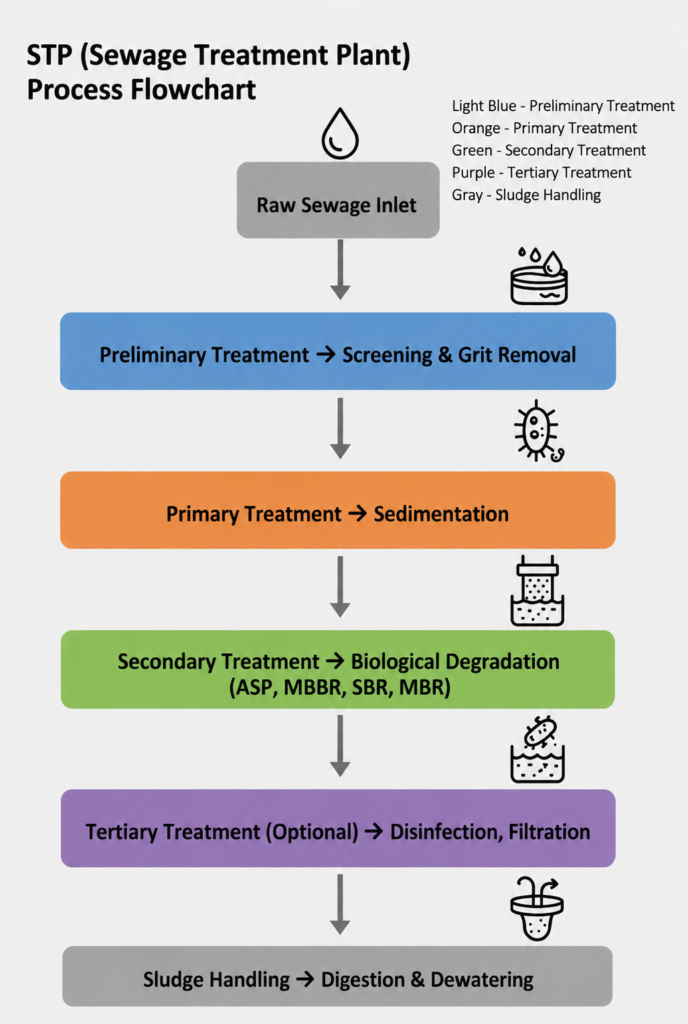
Summary of STP Process:
- Main Focus: Biological treatment
- Duration: Usually 8–24 hours
- Output Quality: Suitable for non-potable reuse
Working Process of ETP (Effluent Treatment Plant)
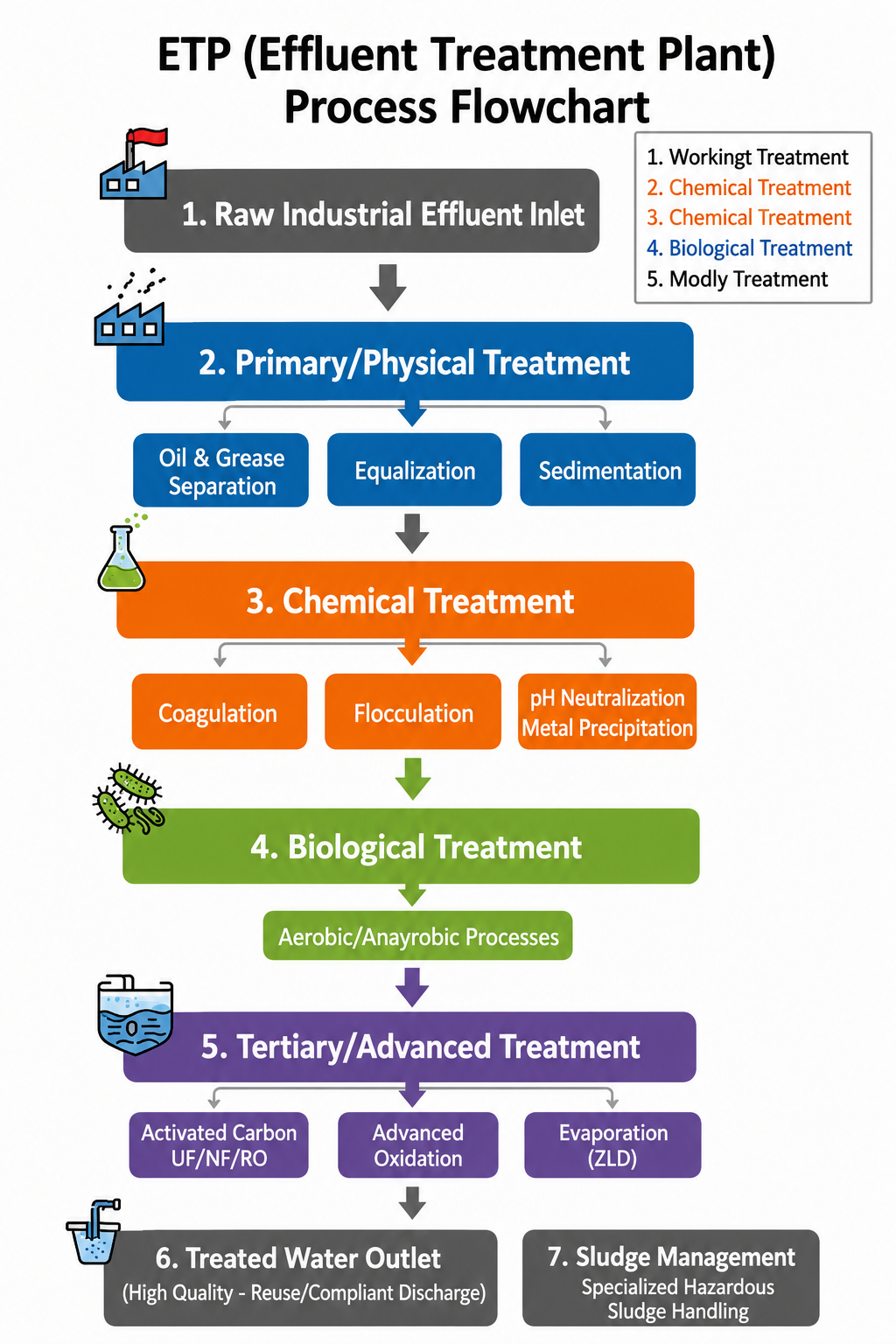
Summary of ETP Process:
- Main Focus: Physico-chemical + Biological + Advanced treatment
- Duration: 24–48+ hours (more complex)
- Output Quality: Very high purity, often ZLD compliant
ETP vs STP Applications
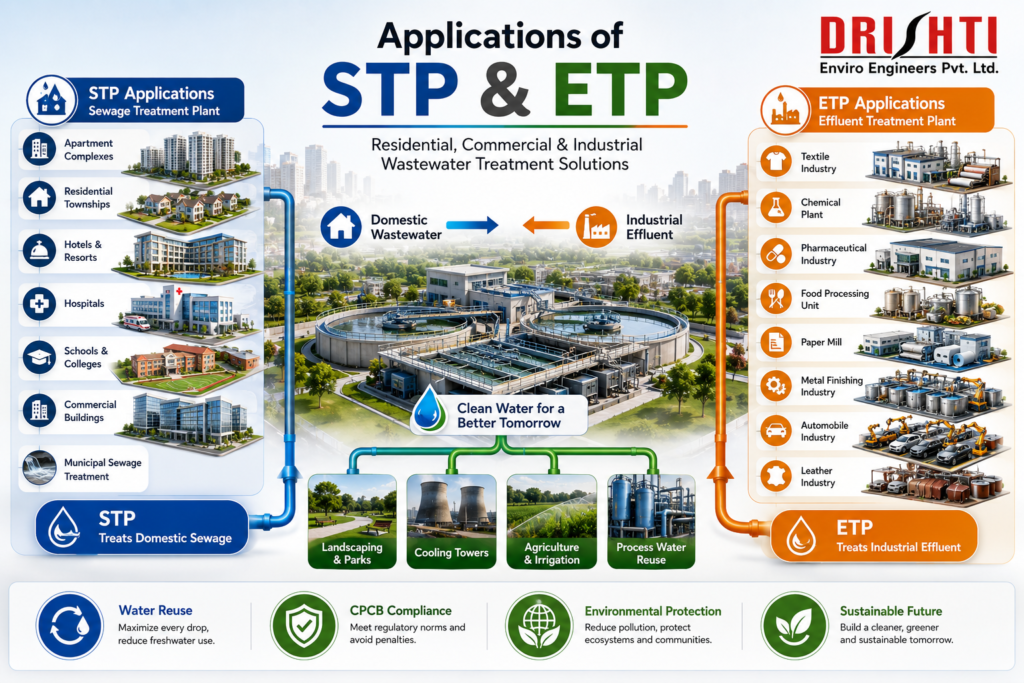
STP Applications (Domestic Sewage)
- Apartment complexes & Housing societies
- Townships & Residential projects
- Hotels, Resorts & Restaurants
- Hospitals & Nursing homes
- Commercial buildings & Offices
- Schools, Colleges & Educational campuses
- Municipal sewage treatment plants
ETP Applications (Industrial Effluent)
- Textile & Dyeing industries
- Chemical & Fertilizer manufacturing
- Pharmaceutical companies
- Food & Beverage processing
- Electroplating & Metal finishing
- Pulp & Paper mills
- Distilleries & Breweries
- Automotive & Paint industries
- Leather tanning units
Frequently Asked Questions (FAQs)
1.What is the main difference between ETP and STP?
The main difference between ETP (Effluent Treatment Plant) and STP (Sewage Treatment Plant) is the type of wastewater they treat. An STP treats domestic sewage from homes, apartments, hotels, hospitals, and commercial buildings, whereas an ETP treats industrial wastewater containing chemicals, oils, heavy metals, dyes, and toxic pollutants.
2. Which is better: ETP or STP?
Neither is universally better—they serve different purposes. An STP is ideal for treating domestic wastewater, while an ETP is designed for industrial effluent. The right choice depends on your wastewater source, pollutant load, and regulatory requirements.
3. Can treated water from an STP or ETP be reused?
Yes. Treated water from an STP can be reused for gardening, landscaping, toilet flushing, and cooling towers. Treated water from an ETP can be reused in industrial processes, cooling systems, or safely discharged after meeting CPCB and Pollution Control Board standards.
4. Which industries require an Effluent Treatment Plant (ETP)?
Industries such as textile, chemical, pharmaceutical, food processing, dairy, paper mills, electroplating, automobile manufacturing, paint, leather, and metal finishing commonly require an ETP to treat industrial wastewater before discharge or reuse.
5. Is an STP mandatory for residential apartments and commercial buildings?
Yes. Depending on local municipal regulations and Pollution Control Board guidelines, many residential societies, hotels, hospitals, commercial complexes, educational institutions, and townships are required to install a Sewage Treatment Plant (STP) to treat domestic sewage.
6. How long does it take to install an STP or ETP?
The installation time depends on the plant capacity and project requirements. Standard packaged STP and ETP systems can often be installed within 15–30 days, while larger customized projects may require additional time for civil work and commissioning.
7. What technologies are commonly used in STP and ETP systems?
STPs commonly use technologies such as MBBR (Moving Bed Biofilm Reactor), SBR (Sequential Batch Reactor), MBR (Membrane Bioreactor), and Activated Sludge Process (ASP). ETPs typically combine physical, chemical, and biological treatment, including coagulation, flocculation, neutralization, aeration, filtration, and sludge handling.
8. How do I choose the right wastewater treatment plant for my project?
Choosing the right wastewater treatment plant depends on factors such as the wastewater source, flow capacity, pollutant concentration, available space, water reuse requirements, budget, and CPCB compliance. Consulting an experienced wastewater treatment company ensures the system is properly designed for your specific needs.
Conclusion
Understanding the ETP vs STP differences is crucial for making an informed, cost-effective, and compliant decision. Whether you need a Sewage Treatment Plant for a residential project or an Effluent Treatment Plant for industrial operations, the right choice protects the environment and your bottom line.
At Drishti Enviro, we design, supply, install, and maintain customized STP and ETP systems across India. Our solutions focus on efficiency, compliance, and maximum water reuse.
Ready to find the right solution for your project? Contact us today for a free wastewater analysis and consultation.
Contact Details
Phone: 9815564242
Email: info@drishtienviro.in
Address: Moti Nagar, Ludhiana, Punjab
Website: www.drishtienviro.in
Drishti Enviro – Aapka Trusted Partner for a Cleaner Ludhiana!
Sewage Treatment Plant Manufacturer in LudhianaSewage Treatment Plant Manufacturer in Ludhiana
Sewage Treatment Plant Manufacturer in LudhianaSewage Treatment Plant Manufacturer in Ludhiana