
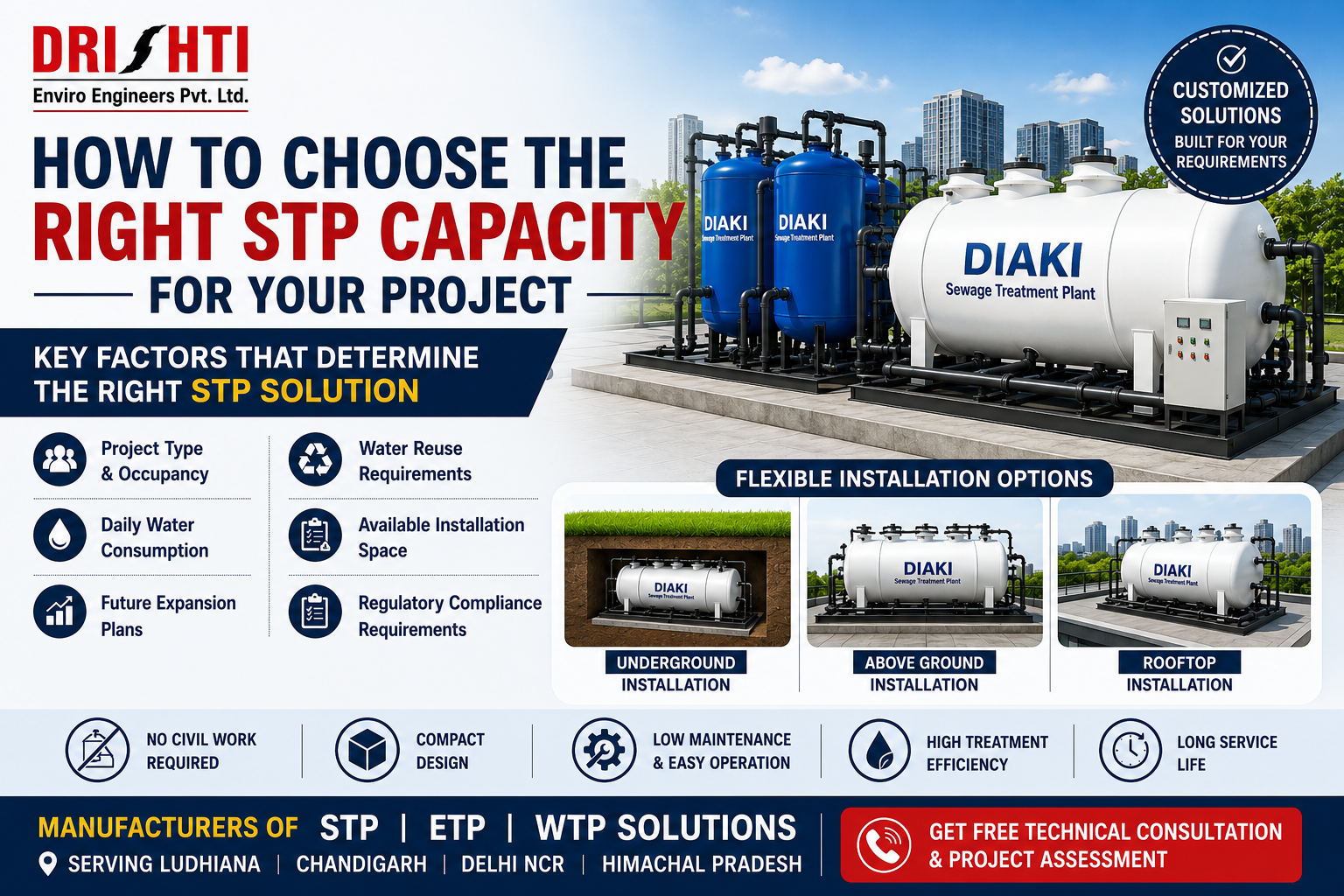
STP capacity calculation is the process used to determine the correct sewage treatment plant size for residential, commercial, institutional, and industrial projects. It ensures efficient wastewater treatment, cost control, and long-term system performance.
Whether you are planning an apartment complex, hotel, hospital, school, shopping mall, or industrial facility, choosing the right STP capacity can save significant operational expenses and prevent future system failures.
Why Choosing the Correct STP Size Matters
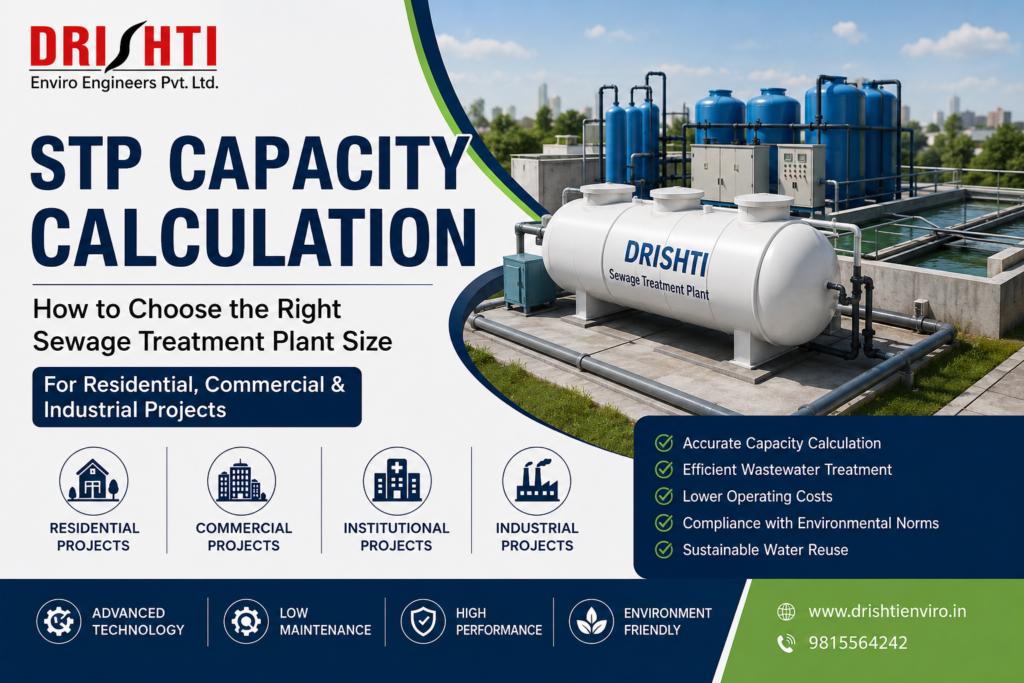
Choosing the right STP size directly impacts system performance. When you select the correct capacity, the plant treats wastewater efficiently and operates smoothly even during peak load conditions.
Moreover, a properly sized STP offers several important benefits:
- Improves treatment efficiency
- Reduces operating and maintenance costs
- Ensures compliance with environmental regulations
- Supports safe water reuse
- Extends system lifespan
On the other hand, an undersized plant can overload quickly and deliver poor treatment results. Similarly, an oversized plant increases capital investment and energy consumption unnecessarily.
Therefore, selecting the right STP size improves treatment efficiency, reduces operating costs, supports water reuse, and ensures long-term system reliability.
Factors Affecting STP Capacity Calculation
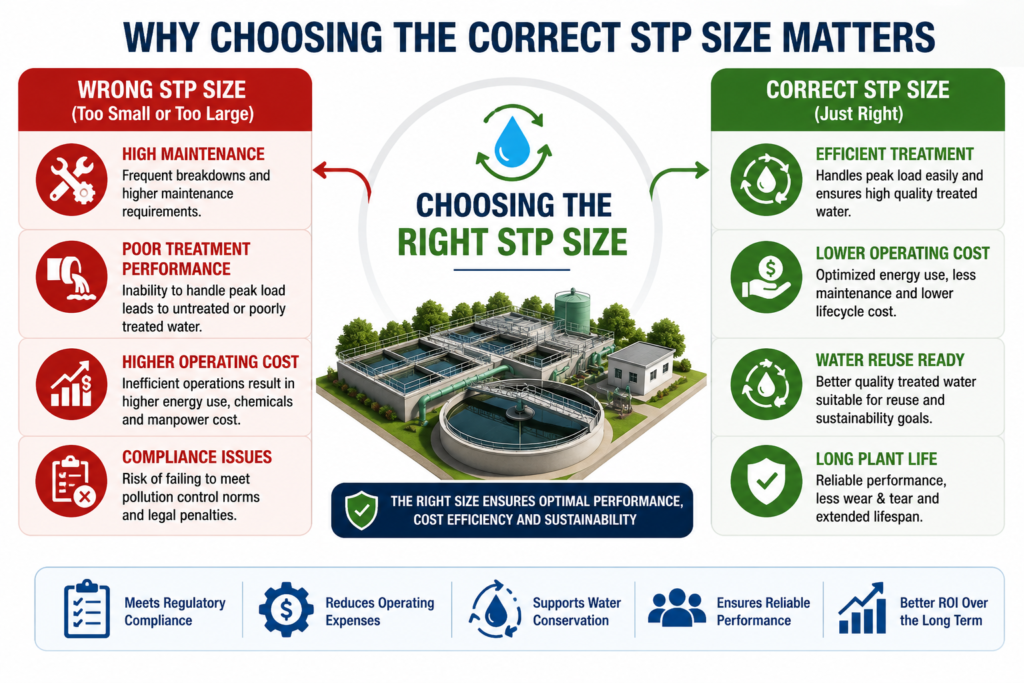
Several factors influence the ideal size of a Sewage Treatment Plant. Understanding these parameters helps project owners choose a system that handles current wastewater generation while supporting future requirements efficiently.
Factors Used in STP Capacity Calculation
| Factor | Importance |
|---|---|
| Daily Water Consumption | Determines sewage generation |
| Number of Occupants | Helps estimate wastewater load |
| Project Type | Influences treatment requirements |
| Peak Usage Hours | Prevents system overloading |
| Future Expansion | Supports long-term growth |
| Water Reuse Requirements | Determines treatment quality standards |
| Available Space | Helps select suitable technology |
Furthermore, evaluating these factors carefully helps ensure accurate capacity selection and efficient plant operation.
How to Calculate the Right STP Capacity
Selecting the correct treatment capacity requires a systematic assessment of wastewater generation and future project requirements. While every project has unique conditions, standard calculations can help estimate the ideal plant size. As a result, proper planning ensures efficient treatment performance, regulatory compliance, and long-term operational reliability.
Step 1: Determine Daily Water Consumption
First, calculate the total daily water consumption of the project. This includes water used for domestic activities, sanitation, kitchens, landscaping, and other operational requirements. Accurate water consumption data provides the foundation for estimating sewage generation.
Step 2: Estimate Wastewater Generation
Next, estimate the amount of wastewater generated. In most projects, approximately 80% to 90% of the water consumed converts into wastewater. However, this percentage may vary depending on the facility type and water usage patterns. Consequently, accurate estimation helps determine the treatment load that the system must handle.
Step 3: Consider Peak Load Conditions
After estimating wastewater generation, evaluate peak load conditions. Wastewater generation does not remain constant throughout the day. For example, residential complexes often experience higher loads during morning and evening hours. Likewise, commercial and institutional facilities may have specific peak operating periods. Therefore, the selected system must handle these fluctuations effectively.
Step 4: Plan for Future Expansion
Finally, consider future growth while determining treatment capacity. Additional occupants, facility expansion, or increased operational activities can significantly increase wastewater generation over time. Therefore, planning ahead helps avoid costly upgrades and operational challenges in the future.
Why Choose Drishti Enviro Engineers Pvt. Ltd.?
At Drishti Enviro Engineers Pvt. Ltd., we deliver customized and reliable wastewater treatment solutions designed to meet diverse project requirements.
Our Key Advantages
✅ Customized STP Solutions
✅ Advanced Treatment Technology
✅ Compact and Space-Saving Designs
✅ Low Operating Costs
✅ High Treatment Efficiency
✅ CTE & CTO Assistance
✅ Expert Installation and Technical Support
✅ Reliable Long-Term Performance
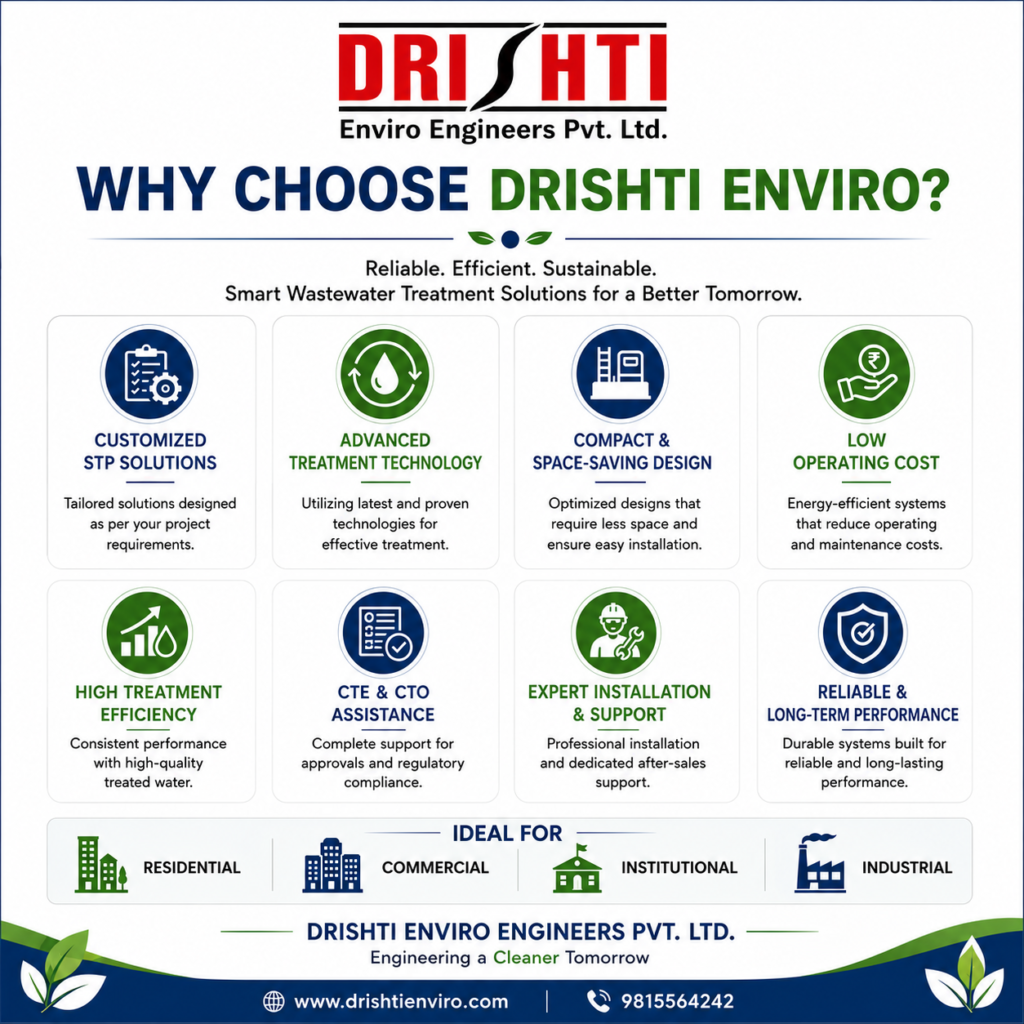
Drishti Enviro Engineers Pvt. Ltd.
Smart Water & Wastewater Treatment Solutions
Discover why Drishti Enviro Engineers Pvt. Ltd. is a trusted partner for sewage treatment, wastewater recycling, and environmental engineering solutions.
Frequently Asked Questions (FAQs)
How is STP capacity calculated?
STP capacity depends on daily water consumption, wastewater generation, occupancy levels, and project-specific requirements.
What percentage of water becomes wastewater?
Typically, 80% to 90% of consumed water converts into wastewater.
Why is proper STP sizing important?
Proper sizing ensures efficient treatment, lower operating costs, regulatory compliance, and long-term system performance.
Which facilities need an STP?
Residential societies, hotels, hospitals, schools, colleges, shopping malls, commercial buildings, and industries commonly require STPs.
Can treated water be reused?
Yes. Organizations can reuse treated water for gardening, flushing, landscaping, cooling systems, and other non-potable applications.
Does Drishti Enviro provide STP sizing assistance?
Yes, Drishti Enviro provides expert guidance for STP capacity calculation, system design, installation, and ongoing support.
Conclusion
STP capacity calculation plays a crucial role in selecting the correct sewage treatment plant size for any project. Moreover, proper sizing ensures efficient wastewater treatment, reduces operating costs, and improves long-term system reliability. Therefore, every project should carefully evaluate its wastewater generation and future growth requirements before selecting an STP. Ultimately, accurate capacity planning supports sustainable water management and environmental compliance.
Contact Details
Phone: 9815564242
Email: info@drishtienviro.in
Address: Moti Nagar, Ludhiana, Punjab
Website: www.drishtienviro.in
Drishti Enviro – Aapka Trusted Partner for a Cleaner Ludhiana!